
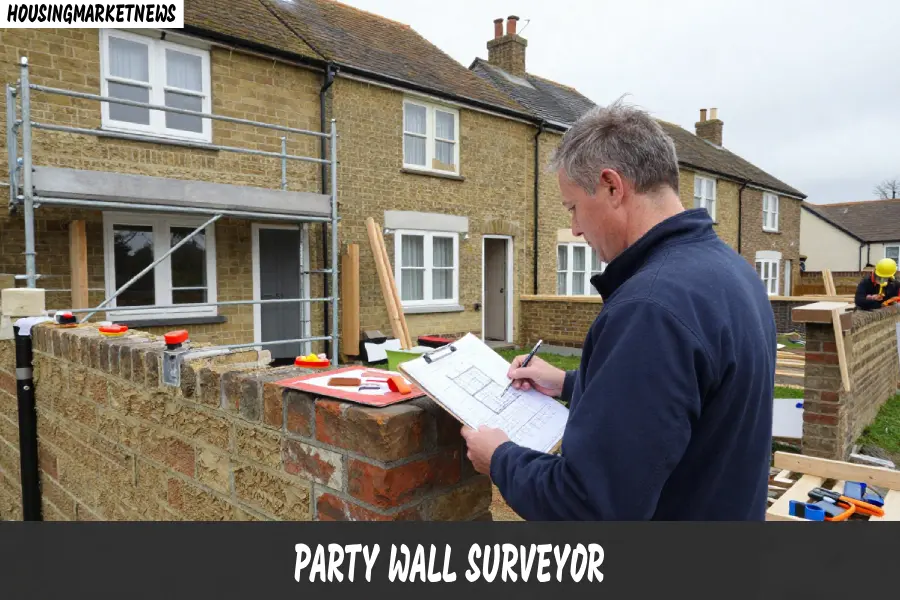
If you’re planning a loft conversion, extension, or any structural work on a terraced or semi-detached home, there’s a good chance you’ll need a party wall surveyor before you can start. It’s one of those steps most homeowners don’t think about until their builder or architect brings it up — and by then, it can hold up your entire project if you’re not prepared.
Here’s what the process involves and why it matters.
What Is a Party Wall?
A party wall is any wall shared between two properties. The most obvious example is the wall between two terraced or semi-detached houses. But it also includes garden walls built on the boundary line and even floors and ceilings between flats.
The Party Wall etc. Act 1996 sets out rules for anyone in England and Wales who wants to carry out certain types of building work near or on a shared wall or boundary. It’s there to protect both you and your neighbour.
What Work Triggers the Act?
Not every home improvement requires a party wall notice. But more projects trigger it than most people realise.
You need to serve notice if you’re cutting into a party wall to insert a steel beam — which happens with most load bearing wall removals in terraced houses. You also need one if you’re building a new wall on or up to the boundary line, or raising or demolishing an existing party wall.
The Act also covers excavation work. If you’re digging foundations for an extension within three metres of a neighbouring building, or within six metres if the dig goes below the level of their foundations, you need to notify your neighbour. That catches most rear and side extensions in London, where houses sit close together.
Loft conversions often trigger notices too, particularly when the work involves strengthening the party wall or cutting into it for structural support.
The Notice Process
Before starting any work covered by the Act, you must serve a written notice on your neighbour. This needs to go out at least two months before work begins for party wall work, or one month for excavation work.
Your neighbour then has 14 days to respond. They can consent in writing, which means you can go ahead without appointing surveyors. If they don’t respond within 14 days, the Act treats that as a dispute — even if your neighbour has no actual objection. They might just be busy, on holiday, or unsure what to do.
This is where most homeowners hit a wall. Once there’s a dispute, both sides need a surveyor.
What a Party Wall Surveyor Does
A party wall surveyor is a specialist who manages the legal process under the Act. They’re not the same as a building surveyor or a structural engineer — their role is specifically about protecting both parties during construction work that affects shared structures.
The surveyor carries out a schedule of condition on the neighbouring property before work starts. This is a detailed record — with photos — of the current state of the walls, ceilings, and any areas that might be affected by the building work. It’s there so everyone has proof of what things looked like before construction began.
They then prepare a party wall award. This is a legal document that sets out what work is being done, how it should be carried out, and what protections are in place for the neighbour’s property. It also covers things like working hours, access arrangements, and who pays for what.
London-based practices like AC Design Solution — Chartered Architectural Technologists with over 10,000 UK projects delivered — offer party wall surveying alongside architectural and structural engineering services, which can simplify the process when your project also needs building regulation drawings or structural calculations.
How Much Does It Cost?
Costs depend on the complexity of the job and where you are in the country. In London, expect to pay between £900 and £1,500 per neighbour for a straightforward party wall award. If both sides appoint their own surveyor, the building owner — that’s you — typically pays for both.
For a terraced house with neighbours on both sides, that means you could be looking at £2,000 to £3,000 just for party wall fees before any building work begins.
It’s tempting to skip this step to save money. Don’t. If you carry out notifiable work without serving proper notices, your neighbour can seek an injunction to stop the work entirely. Sorting it out after the fact is always more expensive and stressful than doing it properly from the start.
Does It Affect Selling Your Home?
Yes — and this catches a lot of homeowners out.
When you sell a property, the buyer’s solicitor will ask for evidence that any structural work was carried out with the correct approvals. That includes building regulations completion certificates and party wall awards.
If you did an extension or loft conversion without serving party wall notices, it creates a problem during conveyancing. Some buyers will walk away. Others will use it to negotiate a lower price. Indemnity insurance can sometimes cover it, but not all lenders accept that.
The Bottom Line
Party wall notices are a legal requirement, not optional paperwork. They protect your neighbour, protect you, and keep your project on the right side of the law. Budget for the cost, serve your notices early, and get a qualified surveyor involved if there’s any dispute. It’s one of the simplest ways to avoid delays, legal headaches, and problems when you eventually sell.


Comments are closed.