
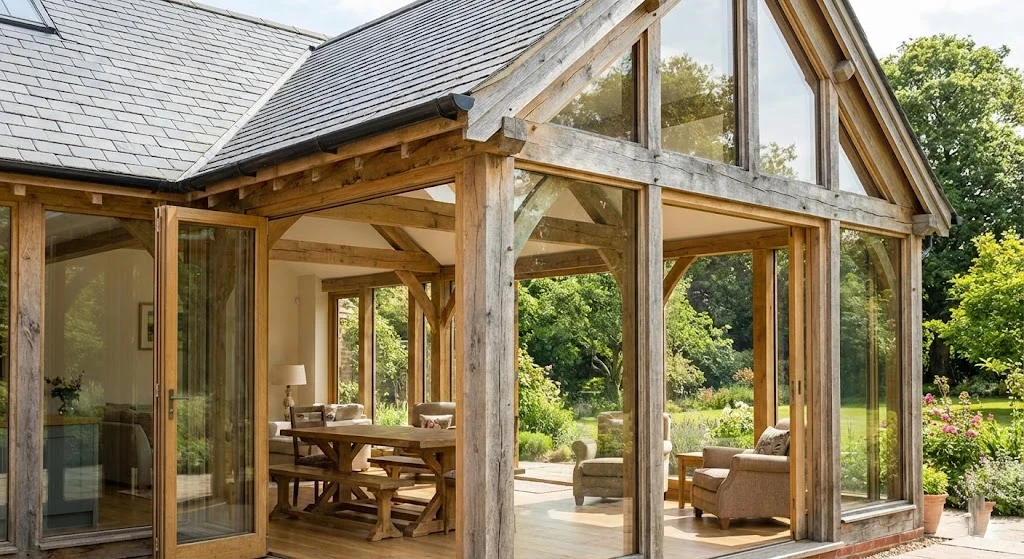
Oak frame extensions bring natural warmth and character to any home. These timber structures feature exposed beams, vaulted ceilings, and large glass panels that flood spaces with light. Costs range from £2,400 to £3,000 per square meter, with faster build times than traditional brick extensions.
You’re standing in your living room, looking at the same four walls you’ve seen for years. You need more space, but you want something special. Something with character that makes people stop and say “wow” when they walk in.
An oak frame extension might be exactly what you’re looking for.
These beautiful timber additions combine old-world craftsmanship with modern living. They work with almost any home style, from Victorian terraces to new builds. And they create spaces that feel completely different from standard brick extensions.
Why Oak Frame Extensions Stand Out

Oak brings something unique to your home that brick and steel just can’t match. The natural grain, the warm honey tones, the way light plays across exposed beams—it all creates an atmosphere that feels both impressive and inviting.
When you build with oak, you’re working with a material that gets better with age. The timber moves slightly as it settles, developing small cracks and character marks that add to its charm. This isn’t a weakness. It’s part of what makes oak special.
The structure itself becomes part of your interior design. Those big oak posts and beams aren’t hidden behind plasterboard. They’re on display, giving your extension an architectural quality that regular extensions lack.
Oak frames also suit virtually any property style. You can create a traditional country kitchen extension with rustic exposed trusses. Or go modern with sleek lines and minimal oak details. The flexibility means you’re not locked into one look.
Plus, these extensions get built faster than you might expect. Most of the work happens off-site in a workshop. The frame arrives at your home in sections, then gets assembled in days rather than weeks. This means less disruption to your daily life.
Popular Design Styles for Oak Extensions
The beauty of oak framing is how it adapts to different aesthetics. You can go full traditional with a cottage-style garden room featuring glazing between oak studs and a pitched tile roof. This works beautifully for period properties where you want the extension to feel like it’s always been there.

Contemporary designs take a different approach. They pare back the oak details, showing fewer beams but making each one count. You might have dramatic A-frame trusses in a vaulted ceiling while hiding the rafters behind plasterboard. This creates clean lines with just enough timber on display to give the space character.
Some homeowners mix old and new deliberately. They’ll attach a modern glass and oak extension to a Georgian brick house, creating a clear contrast between the historical building and the contemporary addition. The oak becomes a bridge between the two styles.
Barn-style extensions have become increasingly popular. These feature high ceilings, exposed structural elements, and a relaxed, open feel. They work particularly well for kitchen-dining spaces where you want one big room for cooking, eating, and hanging out with family.
Garden rooms are another common choice. These are typically single-story structures with glass on three or four sides, connecting you to your outdoor space. They make perfect sunrooms, home offices, or peaceful retreats from the main house.
Vaulted Ceilings and Glass Features
Here’s where oak frame extensions really shine—literally. The structural strength of oak means you can create soaring vaulted ceilings without needing a forest of support columns. Those exposed trusses draw your eye upward, making even modest footprints feel spacious.
A vaulted ceiling with oak beams becomes the focal point of your extension. The natural timber contrasts beautifully with white walls and floods of natural light. You get instant architectural interest without needing fancy finishes or expensive furnishings.
Glass plays a huge role in most oak extensions. Floor-to-ceiling windows between oak posts create a picture-frame effect, turning garden views into living artwork. Glazed gable ends—where the entire triangular wall at the end of a pitched roof is glass—bring in even more light and connect the room to the sky.
Many designs incorporate bi-fold or sliding doors that open the entire side of the extension. When the weather’s nice, you can pull the doors back completely, extending your living space into the garden. The oak frame stands independent of the glazing, so there’s no structural compromise.
Roof lights and skylights work well too. They bring in overhead natural light that changes throughout the day, creating different moods in the space. This works especially well in extensions that can’t have windows on all sides due to neighboring properties.
The glazing systems used in oak extensions are specially designed to handle timber movement. As the oak dries and settles, it shrinks slightly. The glass panels float within their frames, accommodating this natural process without cracking or causing problems.
Size and Layout Options
Oak extensions come in all sizes, from compact 16-square-meter garden rooms to massive 250-square-meter additions that double the size of your home. The most common projects fall between 20 and 40 square meters—big enough to make a real difference without overwhelming your property.
Single-story extensions are the most straightforward. They typically create an open-plan kitchen-dining area or a garden room that connects to existing living spaces. These work well when you want to stay within permitted development rules and avoid complex planning applications.
Two-story extensions give you more bang for your buck in terms of usable space. You might put an open-plan kitchen-diner on the ground floor with a master suite above. Some designs include vaulted ceilings in the upstairs bedroom, creating a luxurious feel without needing a massive footprint.
L-shaped extensions wrap around the corner of your house, often replacing old conservatories or utility rooms. This layout can transform how your home functions, creating better flow between rooms and stronger connections to outdoor spaces.
Keep the floor plan simple—oak framing works best with rectangular or regular shapes. Complicated curves and angles drive up costs without necessarily improving the space. A straightforward design lets the oak and glazing create the visual interest.
The most successful layouts think about how you’ll actually use the space. Where will furniture go? Do you need solid walls for hanging cabinets or displaying artwork? How does the extension connect to existing rooms? Answer these questions before finalizing your design.
Cost Breakdown and Budget Planning
Let’s talk numbers. Oak frame extensions typically cost between £2,400 and £3,000 per square meter for a complete build. This includes groundwork, the frame, glazing, roofing, and all interior finishes.
For a 20-square-meter single-story extension, you’re looking at roughly £48,000 to £60,000. A 30-square-meter project might run £72,000 to £90,000. These figures assume a mid-range specification with quality materials but not the most expensive options available.
The oak frame itself represents about 20 to 25 percent of your total budget. So in a £60,000 project, the timber structure might cost £12,000 to £15,000. The rest covers foundations, walls, windows, doors, roofing, electrics, plumbing, and finishes.
Several factors push costs up or down. Large expanses of glazing cost more than smaller windows. Bi-fold doors run pricier than standard French doors. Complex roof designs with multiple pitches increase both materials and labor.
You can reduce costs by keeping the design simple. Stick to rectangular shapes, avoid complicated angles, and use a hybrid frame where some structural elements are hidden softwood instead of visible oak. This gives you the oak aesthetic where it counts while saving money behind the scenes.
Planning fees run around £258 if you need permission. Building regulations approval adds more, depending on your local authority. Budget an extra 10 to 15 percent above your quotes for unexpected issues—they always come up during construction.
Planning Permission and Building Regulations
Many oak frame extensions fall under permitted development rights, meaning you don’t need planning permission. Single-story rear extensions can typically go up without approval if they meet certain size limits.
The rules get more complex near boundaries. If your extension comes within 2.5 meters of a neighbor’s property line, you’ll almost certainly need planning permission. Height matters too—extensions taller than certain limits require approval regardless of location.
Listed buildings and conservation areas have stricter requirements. You’ll need permission for virtually any external changes to a listed property. Conservation areas have special rules about materials, design, and how extensions relate to surrounding buildings.
Even if you don’t need planning permission, you still need building regulations approval. This covers structural safety, fire protection, energy efficiency, and accessibility. Most oak frame companies can handle the building regulations drawings and calculations for you.
Start the conversation with your local planning authority early. They can tell you if your project needs permission and what issues might arise. Some areas have design guides that show what they consider appropriate for extensions.
If you’re replacing an existing structure like an old conservatory, mention this in your application. Planners generally view replacement projects more favorably than brand-new additions.
Timeline and Construction Process
From initial concept to finished extension, expect the whole process to take around six months minimum. More complex projects can stretch to a year or longer.
The design phase typically takes two to four weeks. You’ll work with designers to create plans that suit your home, budget, and needs. Once you’re happy with the concept, detailed technical drawings get produced.
Planning permission—if required—takes at least eight weeks from submission. Building regulations approval runs concurrently. During this time, your frame manufacturer can start preparing shop drawings and ordering materials.
The actual construction happens in stages. First comes site preparation and foundations, which might take two weeks. Then the oak frame gets delivered and erected. This is the exciting part—your extension goes from concept to physical reality in just a few days.
Following frame erection, the build team installs roofing, windows, and doors. This creates a weathertight shell. Interior work follows: electrics, plumbing, insulation, plastering, flooring, and final finishes. This phase takes the longest, often six to eight weeks.
Site disruption is typically less than with traditional brick extensions. The off-site fabrication means less noise, mess, and time with builders tramping through your house. You can often continue living normally during most of the construction.
Energy Efficiency and Sustainability
Oak extensions can be remarkably energy efficient when built properly. The frame itself provides some insulation, and modern designs incorporate high-performance insulated panels between or around the oak structure.
Triple-glazed windows significantly reduce heat loss through all that glass. Combined with insulated panels and proper sealing, your oak extension can meet or exceed building regulations for thermal performance.
Underfloor heating works brilliantly in these spaces. It eliminates the need for radiators that would clutter your clean design, and it provides even warmth throughout a large open area. The warm floor feels wonderful on bare feet too.
Mechanical ventilation with heat recovery systems help in super-insulated extensions, especially those with large south-facing glass areas that might overheat. These systems bring in fresh air while capturing heat that would otherwise escape.
From a sustainability standpoint, oak is hard to beat. It’s a renewable material that stores carbon rather than producing it. Properly managed oak forests regrow, making timber one of the most environmentally responsible building materials available.
Many oak frame companies source timber from certified sustainable forests. Some can even tell you exactly where your oak was grown. This traceability gives you confidence in the environmental credentials of your extension.
Making Your Oak Extension Work for You
The best oak frame extensions feel personal. They reflect how you live and what matters to you. Maybe that’s a kitchen with space for the whole family to cook together. Or a peaceful garden room where you can work from home without distractions.
Start by creating a clear wish list. How will you use this space? What furniture needs to fit? Do you want to see the garden, the sunrise, the street? How much oak do you want visible? These questions guide your design toward something that truly works for your life.
Visit completed projects if possible. Many oak frame companies host open house events where you can see finished extensions and talk to homeowners about their experience. Photos only tell part of the story—standing in the actual space gives you a much better sense of how it feels.
Don’t rush the design phase. Getting the layout right from the start saves time and money down the road. A few extra weeks of planning prevents expensive changes mid-construction.
Oak frame extensions add real value to your property, both financially and in quality of life. You get extra space that’s genuinely special—somewhere you’ll want to spend time, not just square meters on a floor plan. And you create something that will still look good and function well decades from now.
That’s the real magic of building with oak. You’re not just extending your house. You’re creating a space with character, craftsmanship, and a connection to natural materials that never goes out of style.

Comments are closed.