
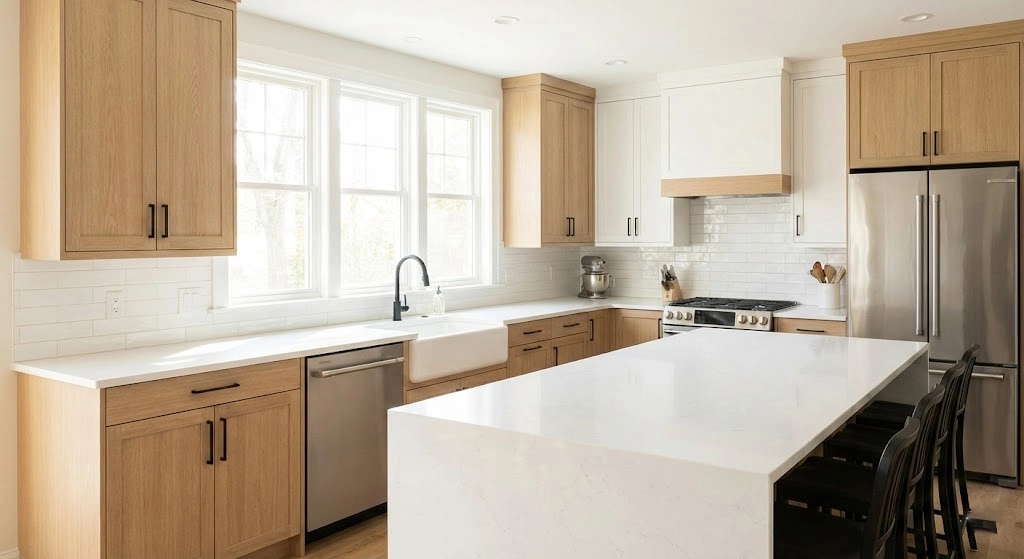
Cabinet refacing updates your kitchen by replacing doors and drawer fronts while keeping existing cabinet boxes intact. This process applies new veneer to visible surfaces and costs 30-50% less than full replacement, typically taking just 2-5 days to complete with minimal disruption.
You walk into your kitchen and see those tired, outdated cabinets staring back at you. The wood looks worn, the color feels wrong, and the whole space needs a refresh. But when you check prices for new cabinets, your jaw drops. There’s got to be a better way, right?
That’s where cabinet refacing comes in. This process gives you a brand new kitchen look without the massive price tag or months of construction chaos. You keep what’s working and change what’s not. Simple as that.
What Cabinet Refacing Actually Means
Think of cabinet refacing as giving your kitchen a facelift. Your cabinet boxes stay right where they are. You’re not ripping anything out or moving the plumbing around. Instead, you replace the doors, drawer fronts, and the thin surface layer on the visible parts of your cabinets.

The cabinet boxes are the structural frames that hold everything together. These stay in place during refacing. What changes is everything you see. New doors go up. Fresh drawer fronts slide in. A thin material called veneer covers the face frames and any exposed sides. New hardware finishes the look.
This approach works because most cabinet boxes stay structurally sound for decades. The doors and visible surfaces show wear first. By replacing just these parts, you get a kitchen that looks completely new. Your neighbors won’t believe you didn’t tear everything out and start over.
How Much Does Cabinet Refacing Cost
In 2024, most homeowners spend between $4,500 and $13,000 to reface their kitchen cabinets. The exact price depends on your kitchen size, the materials you pick, and where you live. Professionals typically charge $150 to $450 per linear foot of cabinetry.
For a standard 10-by-10-foot kitchen, expect to pay somewhere in the middle of that range. Larger kitchens with more cabinet space push toward the higher end. Your material choices make a big difference too. Laminate veneer costs less than real wood, and fancy hardware adds up fast.
Labor makes up 50% to 70% of your total cost. You’re paying for skill and precision here. Installing veneer correctly takes experience. One wrinkle or bubble ruins the whole look. That’s why most people hire professionals even though the material costs aren’t huge.
Compare this to full cabinet replacement. New cabinets typically run $25,000 to $30,000 or more for an average kitchen. You’re looking at serious savings with refacing. Most homeowners save 30% to 50% by choosing to reface instead of replace.

The Refacing Process Step by Step
The work starts with measurements. Professionals measure every cabinet box, door, and drawer front down to the millimeter. Precision matters because nothing fits right if the measurements are off even slightly.
Next comes removal. Workers take off all your cabinet doors and drawer fronts. They label each piece so everything goes back in the right spot. They also remove your old hardware like hinges and handles. If your drawer slides are shot, this is when they get replaced too.
Surface prep happens next. The team cleans all the cabinet boxes thoroughly. Any grease or grime has to go. They sand rough spots and fill small dents. The surface needs to be smooth and clean for the veneer to stick properly.
Then comes the veneer application. Thin strips of wood or other materials get applied to the face frames and exposed cabinet sides. Workers cut each piece to fit exactly. They apply adhesive, position the veneer, and use heat to create a permanent bond. They trim the edges for a perfect fit.
Installing new components wraps up the job. Your new doors go on with fresh hinges. New drawer fronts attach to the existing drawer boxes. Finally, workers install your chosen hardware. Handles, knobs, and pulls complete the transformation.

When Cabinet Refacing Makes Perfect Sense
Refacing works best when your cabinet boxes are still in great shape. The frames need to be solid, with no sagging shelves or broken joints. If the bones are good, refacing gives you excellent results.
You should also be happy with your current kitchen layout. Refacing doesn’t change where your cabinets sit or how much storage you have. The sink stays put. Your appliances don’t move. You’re updating the look, not redesigning the space.
Refacing typically takes just a few days to complete, compared to weeks for new cabinets. Your kitchen stays functional the whole time. You can still cook dinner and make your morning coffee. The workers clean up at the end of each day.
This approach also makes sense if you care about waste. Cabinet refacing reduces waste by keeping perfectly good cabinet boxes out of landfills. You’re being smart about resources and still getting a beautiful result.
Material Options for Your New Look

Laminate gives you the most affordable option. This synthetic material comes in tons of colors and patterns. Some laminates even look like real wood. Laminate cabinet refacing costs $2,000 to $4,000 for an average kitchen. It’s water-resistant and durable, though it can chip if you bang it hard enough.
Wood veneer sits in the middle price range. This option runs $2,500 to $8,000 for a typical kitchen. Real wood veneer is a thin slice of actual wood that gets applied to your cabinet surfaces. It looks and feels authentic because it is. You get that natural grain and warmth that only real wood provides.
Thermofoil offers another choice. This is a vinyl material that gets heated and pressed onto the cabinet surface. It creates a seamless, smooth finish. Thermofoil works great for modern, clean-lined kitchens. It handles moisture well and cleans easily.
Your hardware matters too. Cabinet knobs typically cost $2 to $4 each, while door hinges run $4 to $20 per hinge. Multiply that by 20 or 30 doors and drawers, and the hardware cost adds up. But new hardware really makes the whole project pop. Don’t cheap out here.
DIY or Hire a Pro
Some brave souls tackle cabinet refacing themselves. If you’re handy, patient, and detail-oriented, it’s possible. You’ll need accurate measuring tools, sharp cutting implements, rollers, a heat gun, sanders, and plenty of time. Budget around $150 to $300 for tools if you don’t already own them.
Working with veneer is tricky though. Doing it yourself without extensive experience may result in lopsided application, creases, tears, or bubbles. Once you stick that veneer down wrong, fixing it gets messy. You might end up spending more to correct mistakes than you saved by doing it yourself.
Most people hire professionals for good reason. These folks do this work every day. They know how to handle veneer, cut perfect miters, and make everything line up just right. You get a warranty on the work too. If something goes wrong, they fix it.
Professional refacing typically takes 2 to 4 days for a standard kitchen. A DIY project might drag on for weeks, especially if you’re working around your regular job. Time has value. Sometimes paying the pros makes more sense than spending your weekends frustrated in the garage.
When Replacement Makes More Sense
Cabinet refacing isn’t always the answer. If your cabinet boxes are falling apart, refacing won’t help. Sagging shelves, weak joints in drawer boxes, and damaged cabinet structure need replacement, not refacing.
Layout problems also can’t be fixed by refacing. Maybe your kitchen workflow is terrible. Perhaps you need way more storage space. If you want to move cabinets around, add an island, or completely change the design, you need new cabinets.
Many older cabinets are built from particle board, which doesn’t hold up well to moisture. If your cabinet boxes show water damage, warping, or structural weakness, save your money for replacement. Refacing damaged cabinets is like putting new paint on a rotting fence. It looks better for a minute, but the problems remain.
Modern cabinet features might not work with your old boxes either. Things like soft-close hinges, pull-out shelves, and lazy Susan corners need proper mounting points. Older cabinets sometimes can’t handle these upgrades. If you want all the latest storage solutions, new cabinets give you more options.
Timeline and What to Expect
Most cabinet refacing projects take between three and five days from start to finish. Day one usually involves removal and prep work. Days two and three see the veneer application and installation of new components. The final days include finishing touches and quality checks.
Your kitchen stays partially usable during the work. You’ll need to empty your cabinets before the crew arrives. Keep your countertop appliances accessible. You can still use your sink, stove, and refrigerator. The work creates some dust and requires access to your cabinets, but you won’t be eating takeout for weeks.
Most companies will give you a timeline upfront. Delays happen if they find unexpected damage or if your custom doors take longer to arrive than planned. Ask about their typical timeline and what might cause delays. Good contractors communicate when problems pop up.
Return on Your Investment
Cabinet refacing delivers a 96.1% return on investment. That means for every hundred bucks you spend, you add $96 to your home’s value. That’s an incredible return compared to most home improvement projects.
Minor kitchen upgrades like cabinet refacing can increase your home’s resale value by up to 96%. Real estate agents know that buyers judge kitchens harshly. Fresh, modern cabinets make a strong first impression. They signal that the home has been cared for.
Even if you’re not selling soon, you get to enjoy your updated kitchen every single day. That’s worth something too. You’ll feel better cooking in a space that looks current and clean. Your friends will ask if you did a full renovation. That satisfaction has value you can’t put a number on.
Making Your Final Decision
Start by honestly assessing your cabinet boxes. Open the doors and really look. Are the frames square and solid? Do the shelves sag? Check inside for water damage or particle board that’s falling apart. If everything looks good, refacing becomes a real option.
Think about your kitchen layout next. Does it work for how you cook and live? Would you change where things are if you could? If you’re happy with the basic setup, refacing keeps what works and updates what doesn’t.
Get multiple quotes before committing. Compare estimates from at least three reputable professionals before making your choice. Prices vary, and you want to understand what each quote includes. Some companies bundle hardware. Others charge extra for every little thing.
Ask about warranties too. What happens if a door warps or the veneer peels? Good contractors stand behind their work. They’ll come back and make things right if problems develop. That peace of mind matters when you’re spending thousands of dollars.
Cabinet refacing gives you a real kitchen transformation at a fraction of the cost and hassle of replacement. You save money, save time, and still get that wow factor when people walk into your kitchen. For most homeowners with decent cabinet boxes and a good layout, refacing makes perfect sense. You get the kitchen refresh you’ve been wanting without the massive disruption and expense of a full remodel.


Comments are closed.