
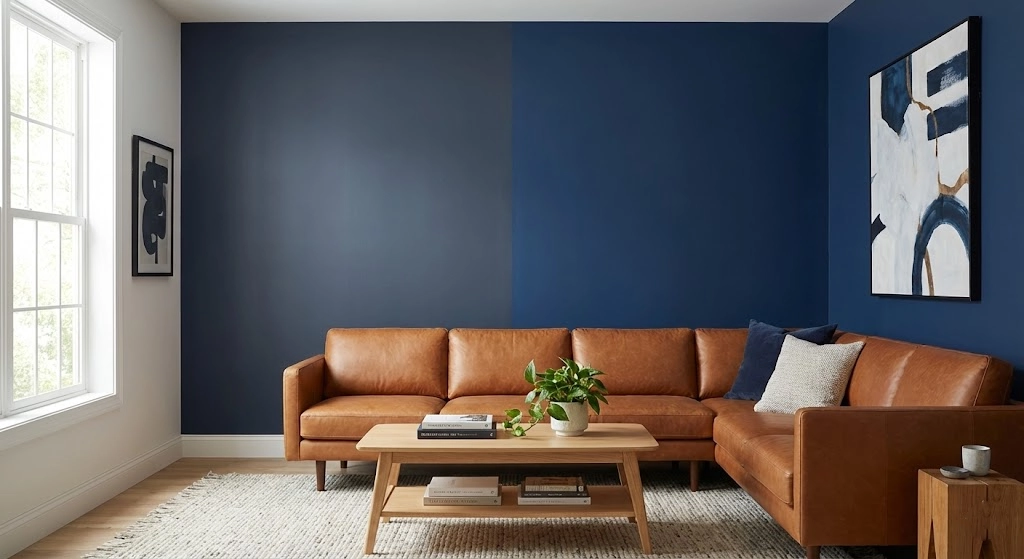
Benjamin Moore Hale Navy (HC-154) offers a grayer, more muted navy with an LRV of 8, working well in varied lighting. Sherwin Williams Naval (SW 6244) presents a richer, deeper blue with an LRV of 4, best for bold statements in bright spaces.
You stand in the paint aisle staring at navy blue samples. Two colors keep catching your eye. Benjamin Moore Hale Navy and Sherwin Williams Naval look similar at first glance. But they’re actually quite different once you get them on your walls.
I’ve watched homeowners struggle with this exact choice for years. Both colors are stunning. Both bring that classic navy sophistication to any room. Yet choosing the wrong one for your space can leave you disappointed.
Let me walk you through everything you need to know about these two popular navy blues.
Understanding the Basics
Benjamin Moore Hale Navy (HC-154) comes from the Historical Collection. This paint color was inspired by American landmarks and maritime traditions. It carries that classic navy feeling but with a modern twist.

Sherwin Williams Naval (SW 6244) earned the title of 2020 Color of the Year. This shade draws inspiration from the night sky and ocean depths. It brings quiet confidence to any space.

Both paints work beautifully on walls, cabinets, doors, and exteriors. But their personalities differ in ways that matter to your final result.
The Light Reflectance Factor

Here’s where things get interesting. Light Reflectance Value (LRV) measures how much light a color bounces back into your room. The scale runs from 0 (absolute black) to 100 (pure white).
Hale Navy has an LRV of around 8. Naval sits much lower at 4. That difference might seem small on paper. In your home, it changes everything.
Naval absorbs nearly all the light that hits it. You’ll notice it reads almost black in dim corners or rooms with little natural light. Hale Navy, while still dark, reflects just enough light to maintain its navy blue character even in darker spaces.
Think about your room’s lighting before you decide. South-facing rooms with tons of sunshine? Both colors work great. North-facing room with limited light? Hale Navy will likely serve you better.
Color Character and Undertones
Hale Navy leans toward gray. This gives it a more neutral, adaptable quality. The gray undertones keep it from feeling too bright or childish. You get a sophisticated navy that plays well with almost any decor style.
The color stays pretty consistent no matter what time of day you look at it. Morning light, afternoon sun, evening lamps—Hale Navy looks like Hale Navy. That predictability makes it easier to work with when you’re planning a room.

Naval tells a different story. This paint shows subtle green-gray undertones. In warm, yellow light (like west or south-facing windows), Naval appears brighter and bluer. Under cooler north-facing light, those gray tones come forward and it reads darker.
Some people love that Naval shifts with the light. Others find it tricky to design around. Your preference here matters.
Where Each Color Shines
Hale Navy works almost anywhere. Living rooms, bedrooms, bathrooms, kitchens—this color adapts. Its gray undertones act like a neutral, letting other colors and textures take center stage.
I’ve seen Hale Navy look stunning in small powder rooms where Natural can feel overwhelming. The slightly higher LRV keeps small spaces from closing in on you. It also performs beautifully on kitchen islands paired with white or light gray cabinets.

Naval demands a bit more planning. This color makes its boldest statements in rooms with good natural light. Living rooms with big windows, kitchens that get morning sun, or dining rooms with overhead lighting—these spaces let Naval show off its rich depth.
Use Naval for accent walls rather than entire rooms if your space runs dark. One wall in this deep blue creates drama without swallowing all the light.
Pairing with Other Colors
Both navy blues love white trim. Benjamin Moore Simply White or Chantilly Lace pair beautifully with Hale Navy. For Naval, try Sherwin Williams Pure White or Extra White.
Hale Navy works with warm neutrals like Lenox Tan or cool grays like Coventry Gray. Its neutral quality means you can mix and match freely without clashing.
Naval pairs well with warm beiges like Ramie or earthy browns like Roycroft Suede. These warmer tones balance Naval’s intensity and bring out its maritime character.
Want to add pops of color? Hale Navy handles bright accent colors without competing. Think coral pillows, mustard throws, or teal artwork. Naval also works with bold colors but shows them off more dramatically against its darker backdrop.
The Finish Matters
Your paint finish affects how these colors look. Matte or eggshell finishes absorb light, making both colors appear darker and more velvety. These finishes hide wall imperfections well.
Satin finishes reflect a bit more light. This can help Naval feel slightly less heavy in a room. Many people choose satin for high-traffic areas like hallways or kitchens because it’s easier to clean.
Semi-gloss or gloss finishes really change the game. They bounce light around and can make these dark colors feel less intense. Consider gloss for trim, doors, or cabinets rather than walls.
Real-World Performance
Hale Navy maintains its color consistency across different sheens and lighting conditions. What you see on the paint chip is pretty close to what you’ll get on your wall. This reliability makes it beginner-friendly.
Naval can surprise you. That same color will look different at 8 AM versus 8 PM. Some homeowners love this dynamic quality. Others wish they’d chosen something more predictable.
Both colors fade faster on exteriors than lighter shades. If you live in a sunny climate and paint your house Naval or Hale Navy, expect to repaint sooner than you would with a lighter color. The low LRVs mean these colors absorb UV rays and break down quicker.
Making Your Choice
Choose Hale Navy if you want a versatile navy that works in any room and any lighting condition. Pick this color when you’re painting multiple rooms and want consistency throughout your home.
Go with Hale Navy if you’re new to dark paint colors. Its forgiving nature makes it easier to live with while you adjust to darker walls.
Choose Naval if you want drama and you have great natural light. This color rewards bold choices with rich, stunning results. Pick Naval when you’re ready to commit to a true statement wall or when your room can handle a very dark color.
Naval works best for experienced painters or those working with a color consultant who can help navigate its light-sensitive nature.
Testing Before Committing
Never skip the sample step with these colors. Buy small sample cans of both Hale Navy and Naval. Paint large poster boards or directly on your walls.
Watch how each color looks at different times of day. Check them in morning light, afternoon sun, and evening lamp light. See which one makes you smile every time you walk past it.
Consider your room’s exposure. East-facing rooms get bright morning light but dim in the afternoon. West-facing rooms are the opposite. North-facing rooms stay cool and dim all day. South-facing rooms get the most consistent, warm light.
Your room’s lighting conditions should drive your decision more than any other factor.
The Bottom Line
Both Benjamin Moore Hale Navy and Sherwin Williams Naval deliver beautiful, sophisticated navy blue. Neither one is objectively better than the other. The right choice depends entirely on your space and what you want from your paint color.
Hale Navy offers reliability, versatility, and ease of use. It’s the safer choice that still delivers stunning results. Naval brings drama, depth, and dynamic character. It’s the bolder choice for those ready to embrace a very dark color.
Your room’s natural light matters most. Great light? Either color works. Limited light? Hale Navy wins. Want maximum drama? Naval delivers. Need something predictable? Hale Navy is your answer.
Take your time with samples. Trust your gut. And remember—you’re not stuck with your choice forever. Paint is one of the easiest things to change in your home.
Pick the navy that makes you happy every time you see it. That’s the better paint for your space.


Comments are closed.