
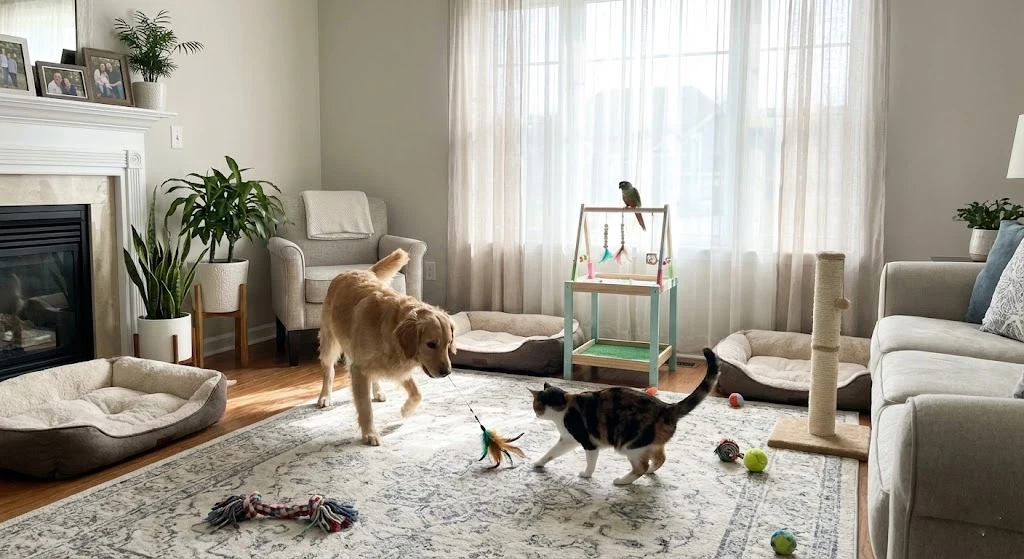
Pets bring joy, love, and companionship into our lives. Whether you have a dog, cat, bird, or even a reptile, making your home safe and comfortable for them is very important. A pet-friendly home is not only about keeping your pets safe—it also makes life easier for you. This guide will help you create a home that your pets will love while keeping them safe from hazards.
Understanding Your Home from a Pet’s Perspective
Before making changes, it is important to look at your home as your pet sees it. Pets notice things differently than humans, and what seems safe to you may be dangerous to them.

Conduct a Pet’s Eye Inspection
- Get down to their level: Crawl, squat, or sit on the floor to see what your pet sees.
- Look for hazards: Check wires, cords, small objects, chemicals, and tight spaces.
- Observe potential risks: Look at areas your pet can climb or jump to, like shelves or counters.
Some common dangers include:
- Small objects pets can choke on
- Open windows or balconies without screens
- Electrical cords they might chew
- Household plants that are poisonous
- Cleaning supplies or chemicals within reach
- Open toilets (especially dangerous for small pets)
By noticing these risks, you can make changes to prevent accidents and keep your pets safe.
Creating Safe and Comfortable Spaces

Once hazards are identified, it is time to make your home pet-friendly. This includes creating special areas for your pets and choosing the right materials for your home.
Designated Pet Areas
Having a space just for your pet helps them feel safe and reduces risks.
- Dog zones: Use a mudroom or small indoor area with a dog bed and water. If possible, provide access to a fenced yard.
- Cat zones: Place litter boxes and water bowls in multiple areas. Cats enjoy toys and climbing spaces.
- Small animals: Rabbits, guinea pigs, and ferrets need secure runs or cages.
- Bird zones: Birds need a safe room for exercise outside the cage. Keep doors closed to prevent escape.
Choosing Pet-Safe Materials

The right materials can make your home easier to clean and more comfortable for pets.
- Flooring: Ceramic tiles, vinyl, or other hard surfaces are easiest to clean. If using carpets, pick darker colors or pet-friendly carpets with high performance rating.
- Fabrics: Leather, ultrasuede, or Crypton Super Fabric are stain-resistant and easy to clean.
- Pet beds: Choose beds slightly larger than your pet, with removable, washable covers.
Room-by-Room Pet Proofing

Every room in your home has unique challenges. Let’s explore how to make each space safer for pets.
Kitchen and Dining Areas
The kitchen can be dangerous due to food, sharp objects, and chemicals.
Tips to pet-proof the kitchen:
- Store human food in secure cabinets
- Keep cleaning supplies out of reach with childproof locks
- Cover trash cans or put them in cabinets
- Be careful with hot surfaces and sharp utensils
- Avoid leaving food unattended
Living Room and Bedrooms
These are the places pets spend most of their time.
- Secure loose wires and cords
- Choose sturdy furniture that won’t tip easily
- Remove small objects pets can swallow
- Use ramps or steps for older pets to access furniture safely
Bathrooms and Laundry Rooms
Bathrooms and laundry rooms can have chemicals and small spaces.
- Keep toilet lids closed
- Store cleaning supplies and medications securely
- Check washers and dryers before use
- Secure pipes and wires to prevent chewing
Making Your Outdoor Space Pet-Friendly

Outdoor space is important for exercise, stimulation, and safety.
Designing a Safe Yard
- Fencing: Make sure fences are tall and secure
- Shade: Provide shaded spots for pets to rest
- Water: Keep fresh water available
- Play areas: Create spaces for exercise
- Ramps: Useful for small or older dogs
- Beds: Outdoor dog beds for lounging
- Catio: Safe outdoor space for cats
Safe Landscaping
Some plants are toxic to pets. Avoid these:
- Azaleas
- Aloe vera
- Lilies and tulips
- Sago palms
Safe alternatives:
- Bamboo
- Catnip
- African violets
- Marigolds
- Zinnias
Use organic gardening methods to avoid harmful pesticides.
Outdoor Enrichment
- Create agility courses for dogs
- Bird feeders for indoor cats
- Plant pet-safe herb gardens with parsley, basil, and mint
Special Considerations for Different Pets

Different pets have unique needs. Here’s how to make your home safe for each type.
Dogs
- Provide toys to reduce boredom
- Keep trash secure
- Give outdoor access regularly
- Block access to dangerous areas
- Fence your yard to prevent escapes
Cats
- Secure heavy objects
- Protect against toxic plants
- Cover cords and secure windows
- Provide scratching posts and climbing areas
Small Animals (Rabbits, Guinea Pigs, Hamsters)
- Ensure cages or runs are escape-proof
- Provide safe chew toys
- Control temperature to prevent stress
Birds
- Use secure cages with locks
- Keep away from kitchens and toxic fumes
- Avoid aerosols, candles, and essential oils
- Provide perches and toys for stimulation
Reptiles & Amphibians
- Escape-proof enclosures with secure lids
- Proper heating, lighting, and humidity
- Avoid toxic materials and unsafe substrates
- Place enclosures away from drafts and direct sunlight
Maintaining a Clean and Healthy Home
A pet-friendly home is a clean home. Regular maintenance keeps pets safe and healthy.
Cleaning Tips
- Vacuum often with a pet hair vacuum
- Groom pets regularly to reduce shedding
- Clean cages, tanks, and litter boxes frequently
- Use enzyme cleaners for accidents
- Wash pet bedding and covers
- Use HEPA air purifiers to reduce allergens
Conclusion
Creating a pet-friendly home takes planning, patience, and ongoing attention. By making your home safe, comfortable, and clean, you create a happy environment for both your pets and your family.
Remember: a pet-friendly home balances safety, comfort, and style. With careful planning, room-by-room adjustments, and regular maintenance, your pets can enjoy a safe, stimulating, and loving environment.


Comments are closed.