
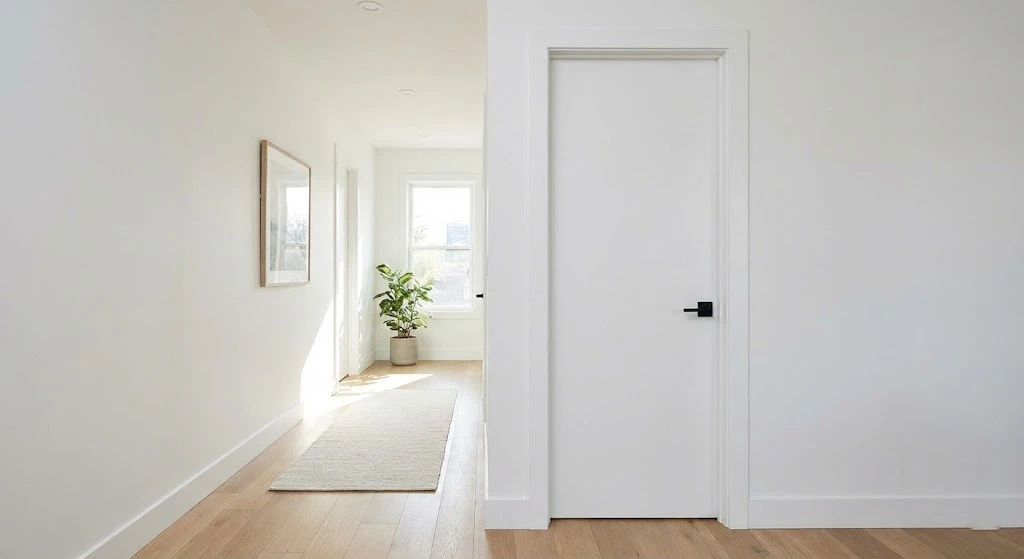
A 34×80 interior door measures 34 inches wide and 80 inches tall. It’s a slightly wider-than-standard option, ideal for master bedrooms, home offices, and accessible spaces. The required rough opening is 36 inches wide by 82.5 inches tall. It comes in hollow core, solid core, and solid wood options.
If you’ve ever stood in a doorway holding a couch on one end and a friend on the other, you already know why door width matters. A 34×80 interior door gives you just a little more room to breathe — and that extra two inches compared to a standard 32-inch door can make a real difference in daily life.
Whether you’re renovating an older home, planning new construction, or just replacing a worn-out door, this guide covers everything you need to know. Size, materials, styles, rough openings, costs — it’s all here.
What Does 34×80 Actually Mean?

The numbers are simple once you know the code. A 34×80 door is 34 inches wide and 80 inches tall. That’s 2 feet 10 inches by 6 feet 8 inches. In the building trade, pros often call this a “2/10, 6/8 door,” pronounced “two-ten, six-eight.”
The 80-inch height has been the standard for interior passage doors in the US for decades. It fits well under standard 8-foot ceilings and matches most existing frames in homes built over the last 50 to 60 years. The 34-inch width sits between the most common sizes of 32 inches and 36 inches, giving you a wider opening without the full commitment of a 36-inch door.
This is also an important distinction — the 34×80 measurement refers to the door slab itself. The actual rough opening in the wall needs to be larger to fit the frame, hinges, and shimming space. More on that below.
Why Choose a 34×80 Interior Door Over Other Widths?
Most standard interior doors run 28, 30, or 32 inches wide. The 34-inch width is a step up from those, and it carries some real practical benefits.
First, moving furniture gets easier. Beds, dressers, sofas — they all need clearance when you’re getting them into a room. A 34-inch door gives movers and homeowners a little more room to work with compared to a 32-inch opening.
Second, accessibility matters. According to the International Residential Code, a 32-inch clear opening is the minimum recommended for wheelchair access. A 34-inch door slab gives you approximately 32 inches of clear passage when open at 90 degrees, which meets many accessibility guidelines. If you’re planning to age in place or have family members with mobility needs, this width is worth serious consideration.
Third, it just feels better. A wider door makes a room feel more open and accessible, even when it’s closed. It reads as a more generous, well-designed space — especially in master bedrooms, home offices, and main hallways.
The Right Rough Opening for a 34×80 Door
This is where a lot of DIY installs go wrong. You can’t just cut an opening the same size as your door. The frame, hinges, and shims all need space too.
For a 34×80 interior door, your rough opening should be 36 inches wide and 82.5 inches tall. That’s 2 inches wider than the door slab and 2.5 inches taller. The extra width gives you 1 inch on each side for the door frame (jamb) and shimming. The extra height accounts for the frame, the floor clearance gap, and any leveling adjustments.
If your rough opening is already framed and it’s slightly too large, you can add a 1×3 furring strip to one or both sides to bring it down to the right size. If it’s too small, you’ll need to reframe — which is a bigger job, so always measure carefully before you order.
Hollow Core vs. Solid Core: Which Is Right for You?
When you shop for a 34×80 interior door, you’ll quickly run into this choice. Hollow core and solid core doors look nearly identical from the outside, but they behave very differently.
A hollow core door has a lightweight wood frame on the outside and a honeycomb cardboard structure inside. This makes it much lighter — easy for one person to carry and hang. These doors typically cost between $50 and $200, which makes them popular for closets, pantries, and other low-traffic spaces where sound control isn’t a concern.
A solid core door, on the other hand, is filled with dense material — usually MDF, wood composite, or particle board — covered with a wood veneer or paint-grade finish. These doors weigh significantly more, but they block sound much better, feel sturdier when you close them, and hold up far longer. Solid core doors run between $150 and $500 depending on material and style.
The right choice depends on what the room needs. Bedrooms, bathrooms, and home offices benefit from solid core doors because you actually want some sound separation. Closet doors or utility room doors can use hollow core without any real downside.
One thing worth knowing: if a hollow core door gets damaged, it’s usually cheaper to replace it than repair it. A solid core door can take more abuse and may only need a paint touch-up after years of use.
Door Styles Available in the 34×80 Size
The 34×80 size is widely available in multiple styles, so you’re not stuck with a plain flat door.
Shaker-style doors are one of the most popular choices right now. They feature a clean, recessed panel design that works with traditional, transitional, and modern interiors. A 2-panel shaker door in 34×80 fits naturally in contemporary homes and pairs well with simple hardware.
Panel doors with more raised detail work well in traditional or craftsman-style homes. You can find 6-panel versions at most home improvement stores in this size. They carry more visual weight and suit older homes with more ornate trim work.
Flush doors — completely flat with no panel detail — are a good pick for ultra-modern or minimalist spaces. They’re also a bit easier to paint because there are no grooves or recesses to work around.
French doors and barn doors can also be found in or near the 34-inch width, though these are often custom or semi-custom. If you want the look of a glass-panel interior door, many manufacturers offer it in this size with frosted or clear glass inserts.
Slab Door vs. Pre-Hung Door: Know the Difference
When you order a 34×80 interior door, you’ll need to decide between a slab and a pre-hung unit.
A door slab is just the door itself — no frame, no hinges attached, no hardware. You buy it when you’re replacing an existing door in a frame that’s still in good condition. This is the less expensive option and works well for straightforward replacements.
A pre-hung door comes with the door already attached to a complete frame with hinges and a pre-drilled bore hole for the knob or lever set. This is the right choice for new construction or when the existing frame is damaged, out of square, or needs to be replaced entirely. Pre-hung units cost more upfront, but they save significant time and labor during installation.
If you’re doing a renovation and the old frame is solid and level, go with a slab. If you’re building new or gutting a wall, go pre-hung.
How to Install a 34×80 Interior Door
Installing a pre-hung door is a manageable project for a confident DIYer with basic tools. You’ll need a level, shims, a drill, a hammer, and finish nails.
Start by setting the door unit into the rough opening. Use shims behind the hinge side first, checking plumb with a level as you go. Nail through the frame and shims into the rough framing once you’re happy with the position. Move to the latch side and repeat, making sure the door swings and closes smoothly before nailing it off. Trim the shims flush with a utility knife and add casing trim to cover the gap between the frame and the drywall.
The most common mistake is rushing the shimming process. Take your time here. A door that’s slightly out of plumb will bind, latch unevenly, or swing open on its own. Spend 20 extra minutes getting it right and you’ll save hours of frustration later.
What Does a 34×80 Interior Door Cost?
Prices vary based on material and style. A basic hollow core 34×80 slab door runs around $50 to $150. A solid core slab in the same size costs between $150 and $400. Pre-hung versions add another $50 to $150 to those figures to cover the frame and hardware.
Solid wood doors in this size can run $300 to $800 or more, depending on the species and finish. If you want a custom finish, glass inserts, or a specialty style, budget accordingly.
Installation by a professional carpenter typically adds $100 to $300 per door, depending on your location and the complexity of the job.
Final Thoughts on the 34×80 Interior Door
The 34×80 interior door hits a sweet spot between everyday practicality and wider accessibility. It’s not a specialty size — you’ll find it at most big-box stores and online retailers without any trouble. But it gives you meaningfully more room than a standard 32-inch door, and that matters more than people expect until they’re actually moving furniture or thinking about long-term accessibility.
Choose the right core material for each room, measure your rough opening carefully, and decide between slab and pre-hung before you shop. Get those three things right and the rest of the process is straightforward.

Comments are closed.