
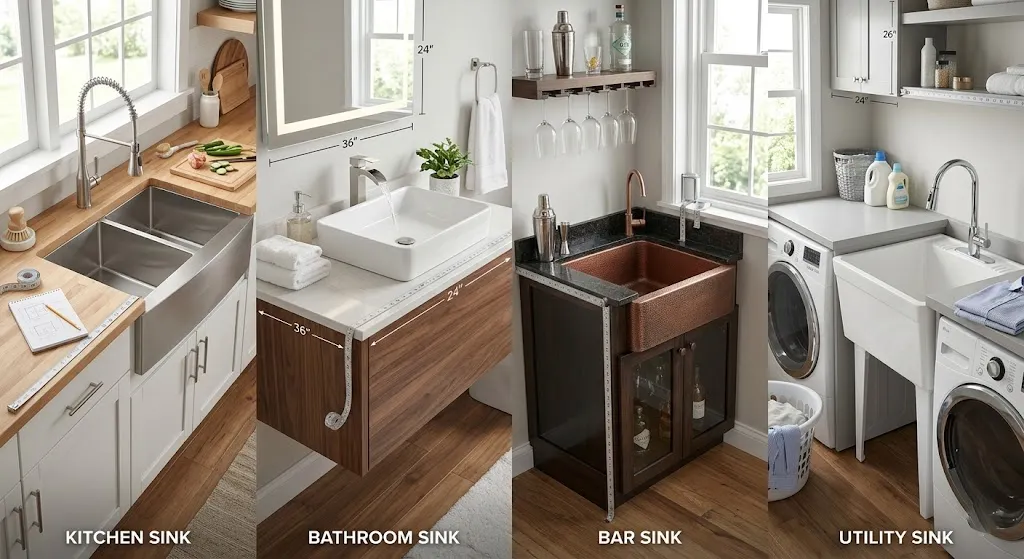
Standard sink sizes vary by room. Kitchen sinks typically measure 30″ wide, 22″ front-to-back, and 9–10″ deep. Bathroom sinks run 16–24″ wide. Bar sinks range from 15–25″ long. Utility sinks go 22–25″. Always measure your cabinet before choosing.
Picking a new sink sounds simple — until you’re standing in a showroom staring at twenty different options, none of which came with a measuring tape. The truth is, most sink shopping goes wrong before it even starts, because people focus on style before they know their size.
This guide walks you through standard sink sizes for every room: kitchen, bathroom, bar, and utility. By the end, you’ll know exactly what to look for and what questions to ask before you buy.
Why Sink Size Matters More Than You Think

The size of your sink isn’t just about fitting in the hole. It affects how your cabinet performs, where your plumbing runs, and whether you actually enjoy using the space day to day. A sink that’s too big eats up counter space. One that’s too small fills up fast and feels frustrating.
Most people replace a sink without measuring the cabinet first. Then they discover the new sink is a half-inch too wide, the cutout doesn’t line up, or there’s no room for the disposal underneath. A few quick measurements before you buy saves hours of headache on install day.
Your sink also needs to match your mounting style. Drop-in sinks sit on top of the counter with a visible rim. Undermount sinks go beneath the countertop for a clean look. Farmhouse sinks expose their front face. Each style has slightly different clearance requirements, so size and style go together when you’re shopping.
Standard Kitchen Sink Sizes
The kitchen sink gets more daily use than any other fixture in the home. That’s why getting the size right matters so much here.
The most common standard kitchen sink size is 30″ wide, 22″ front-to-back, and 9–10″ deep. This setup fits a standard 36-inch sink base cabinet and handles most cooking and cleaning tasks without issue. It gives you enough room for a sheet pan, a stockpot, and still leaves storage space below for a disposal, cleaning supplies, or a small trash system.
Single bowl sinks are the most popular choice for kitchens today. Single bowl sinks typically run 24–36 inches wide, while double bowl sinks run 32–48 inches, with 36 inches being the most common double configuration. If you cook frequently or own large pans, a single bowl gives you the most usable workspace. Double bowls work better when two people often share the kitchen at the same time.
A 27-inch kitchen sink is one of the most common sizes, and you’ll find plenty of designs and configurations to choose from at that measurement. It’s a reliable middle ground — big enough to be useful, small enough to leave counter space on both sides.
Smaller kitchens don’t have to settle for a tiny sink. A 20–25 inch range can still be a functional option for small kitchens, even though it’s smaller than what most people choose. The key is pairing it with an undermount style, which frees up every inch of your counter surface.
Depth matters too, and it’s often overlooked. A 9–10 inch deep basin handles large items without splashing. Eight inches works fine for most households and gives better clearance for under-sink storage. If you’re shorter or have back issues, a shallower basin keeps you from bending over too far every time you wash dishes.
Standard Bathroom Sink Sizes
Bathroom sinks come in more styles than any other category — drop-in, undermount, vessel, pedestal, wall-mount — and each one has its own size range. The good news is that there’s a clear standard to anchor your decision.
The standard bathroom sink size falls between 16 and 20 inches in width or diameter. That range fits most single vanities and leaves enough counter space for everyday items. Round and oval bathroom sinks fall in that 16–20 inch window. Rectangular sinks tend to run a bit wider, typically 19–24 inches wide and 16–23 inches front to back.
Drop-in sinks are the most forgiving to install. Typical drop-in sink dimensions run 16–24 inches wide and 12–20 inches deep, with a basin depth of 5–8 inches. The rim sits on top of the countertop, which covers a slightly imperfect cutout — making it the go-to choice for remodels.
Undermount bathroom sinks give you a cleaner look and an easier surface to wipe down. Undermount sink dimensions typically run from 16 to 24 inches wide and 12 to 18 inches deep. Keep in mind that the interior bowl will be about 1.5 to 2.5 inches smaller than those outer measurements.
Pedestal sinks are a solid pick when you’re short on space and don’t need the storage a vanity provides. The standard size for a pedestal sink is between 22 and 24 inches wide and 29 to 34 inches tall. They work especially well in half baths and powder rooms, where the goal is function without bulk.
Vessel sinks sit on top of the counter and add visual height to the whole setup. Typical dimensions for round vessel sinks run 14 to 20 inches in diameter and four to seven inches deep. Rectangular and square ones tend to be shallower, from 15 to 25 inches long and 16 to 20 inches wide. If you go with a vessel sink, remember that it raises your effective sink height — so you may want to lower the vanity slightly to keep everything at a comfortable level.
Wall-mount sinks are great for tight spaces and accessible bathrooms. Wall-mount sinks usually run 11–24 inches wide and 10–18 inches front-to-back. Because they mount directly to the wall with no cabinet underneath, they open up the floor and make a small bathroom feel larger.
For double bathroom sinks, you’ll need a vanity ranging from 48 to 61 inches to accommodate both bowls comfortably. These work best in a shared master bath or a Jack and Jill setup between two bedrooms.
Standard Bar Sink Sizes
Bar sinks — also called prep sinks or wet bar sinks — are the secondary sinks you find in kitchen islands, home bars, and entertainment areas. They’re small by design, and their whole job is to handle quick tasks: rinsing a glass, washing produce, or filling a bucket with ice.
Bar sinks are smaller than standard sinks and typically run 15 to 25 inches long, 15 inches wide, and 5 to 10 inches deep. Round bar sinks usually have a diameter between 9 and 18 inches. That makes them compact enough to tuck into a kitchen island without disrupting the layout.
Standard kitchen sinks measure around 22″ by 33″ wide, while a bar sink will range from only 9½” to 18″ at most on the widest side. That size difference is exactly what makes them work in a secondary role — they don’t crowd the space or compete with the main sink.
When you’re sizing a bar sink to a cabinet, the rule is simple. For a drop-in bar sink, subtract 3 inches from both sides of the base cabinet measurement. For a 20 by 15 inch cabinet, the sink should be 17 by 12 inches. That clearance makes sure the lip rests safely on the counter surface.
Bar sinks also need a different faucet than a standard kitchen sink. Bar sink faucets usually have a spout height of 8 to 13 inches to allow proper access to the bowl. If the faucet sits too high relative to the sink’s depth, water will splash out every time you turn it on.
Standard Utility and Laundry Sink Sizes
Utility sinks — sometimes called laundry sinks or service sinks — are built for heavy work. Soaking clothes, washing muddy boots, rinsing paint brushes. They’re not meant to be pretty. They’re meant to handle volume.
A 21-inch sink is one of the most common sizes for a laundry room. Twenty-two-inch sizes are also popular for laundry sinks, and you can find both 22-inch widths and lengths in different styles, including undermount and drop-in.
Utility sinks tend to run deeper than bathroom sinks, typically 10–14 inches deep, which is what gives them the capacity for bigger jobs. They also sit higher off the floor than most sinks — usually around 34–36 inches to the rim — so you’re not hunching over during extended tasks.
Most utility sinks use a drop-in or freestanding style, which makes installation straightforward. You’re not cutting into a stone countertop; you’re dropping the sink into a laundry cabinet or setting it on its own legs. That simplicity is part of why utility sinks get replaced less often and with less hassle than kitchen or bathroom sinks.
How to Measure Before You Buy
The fastest way to end up with the wrong sink is to order before you measure. Pull out a tape measure and check three things: the width of your sink base cabinet, the depth of the countertop, and the available space below for plumbing and storage.
For drop-in sinks, your cabinet should be at least 3 inches wider than the sink on each side. For undermount sinks, the outer dimensions of the sink need to be slightly smaller than the interior cabinet opening. For farmhouse sinks, check the manufacturer’s cabinet spec — these require specific support framing that standard cabinets don’t always have.
Also check what’s under the counter before you commit to a deep basin. A 10-inch deep sink needs enough clearance between the drain and the base of the cabinet. If you have a garbage disposal, that clearance shrinks fast. Measuring the vertical space under the counter takes two minutes and saves a return trip to the store.
Once you have your measurements, match them to the standard sizes covered in this guide. You don’t need to get creative here — standard sizes exist because they work. Find the one that fits your space, fits your style, and fits your daily habits. That’s the right sink.

Comments are closed.