
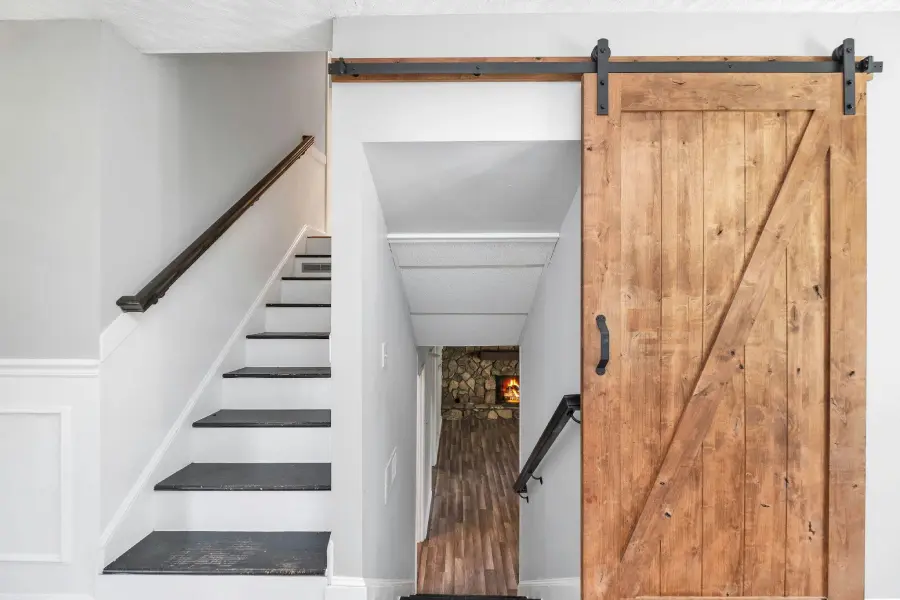
For rooms where every centimetre of floor space matters or where a clean, uncluttered aesthetic is the priority, bespoke pocket doors offer an ingenious, beautifully crafted solution that disappears entirely into the wall when open. A pocket door operates by sliding horizontally along a track system and retracting completely into a cavity or pocket built into the wall adjacent to the opening, rather than swinging outward into the room on hinges. When fully open, the door is invisible within the wall, creating a completely clear opening with no door leaf obstructing the space on either side.
When closed, the door slides out of the pocket to cover the opening, as with any other flat-panel door, providing privacy, sound separation, and visual division between the two spaces it connects. The pocket mechanism requires the wall into which the door retracts to be sufficiently thick to accommodate the door leaf depth, which means pocket doors are best planned for a renovation or new build rather than retrofitted into existing solid walls.
Why Bespoke Pocket Doors Outperform Standard Options
Standard pocket door kits are available from builders’ merchants. They are designed to accommodate door leaves of specific standard dimensions, which limits design possibilities and can compromise results in properties where openings fall outside these predetermined sizes. Bespoke pocket doors are designed and manufactured to the exact dimensions of the specific opening they will serve, ensuring a perfect fit between the door leaf and the frame opening with no visible gaps or awkward proportions.
The design of a bespoke door can also be tailored to match the existing joinery character of the property, whether that means replicating a specific panel profile, matching an unusual hardwood species, or incorporating custom glazing details not available in any standard product range. For renovation projects where quality, precision, and visual continuity throughout the property are important, the bespoke approach consistently delivers superior results.
Design Options for Bespoke Pocket Doors
The design possibilities for bespoke pocket doors are essentially as broad as those available for any other type of custom internal door, encompassing the full range of panel configurations, glazed options, material choices, and surface finishes. A flush pocket door in a solid colour or natural wood veneer is a popular choice for minimalist contemporary interiors, where the intention is for the door to be almost invisible when closed, blending seamlessly with the surrounding wall surface.
A panelled pocket door with a traditional raised or moulded profile suits period properties and more classical interior schemes, providing visual continuity with other doors and joinery features throughout the building. Part-glazed pocket doors are a practical and attractive option where the design requires both the flexibility of a closable room divider and the visual openness and light transfer of a glazed screen.
The Benefits for Small Rooms and Open-Plan Spaces
The value of pocket doors is perhaps most clearly demonstrated in smaller rooms and compact spaces where the swing arc of a conventional hinged door represents a disproportionate loss of usable floor area. In a small bathroom or en-suite, replacing a hinged door with a pocket door can free up enough floor space to comfortably fit a towel rail, a small piece of furniture, or simply make the room feel significantly less cramped and more functional.
In open-plan living areas, pocket doors allow the space to be fully opened when the full extent of the area is needed, while still allowing the creation of separate, acoustically divided zones at other times. Home offices and studies that open off a living room benefit particularly from pocket doors, as they allow the workspace to be clearly defined and closed off during working hours, then opened to make the room feel part of the broader living area in the evening.
Installation Considerations for Pocket Doors
The installation of pocket doors requires careful planning of the wall construction into which the door will retract, and this is most easily and economically achieved during a broader renovation project, when walls are being constructed or modified. The pocket frame, which forms the cavity within the wall and supports the track system, must be built to the exact dimensions of the door leaf and the finished opening, allowing sufficient clearance for smooth operation while maintaining a close, well-sealed fit when the door is closed.
Electrical cables, plumbing pipes, and structural elements within the wall must be carefully positioned to avoid the pocket space, requiring close coordination among the different trades working on the project. Engaging a specialist installer or a joiner with specific experience of pocket door systems will ensure that the mechanism is correctly specified, built, and adjusted for reliable long-term performance.
Maintaining Pocket Doors for Long-Term Performance
Pocket doors are generally straightforward to maintain once correctly installed and adjusted, requiring only occasional attention to the track and roller mechanism to ensure continued smooth operation over many years of regular use. Keeping the track channel clean and free from dust and debris by wiping it periodically with a dry cloth or soft brush prevents the accumulation of material that can cause the rollers to bind or operate noisily over time.
Applying a small amount of dry lubricant to the track and roller components every year or two will further ensure that the door continues to glide smoothly and quietly. The door leaf itself can be maintained in the same way as any other interior door, with the surface finish periodically refreshed as needed and any hardware adjusted to ensure a consistent, gap-free fit between the door and the frame when closed.


Comments are closed.