
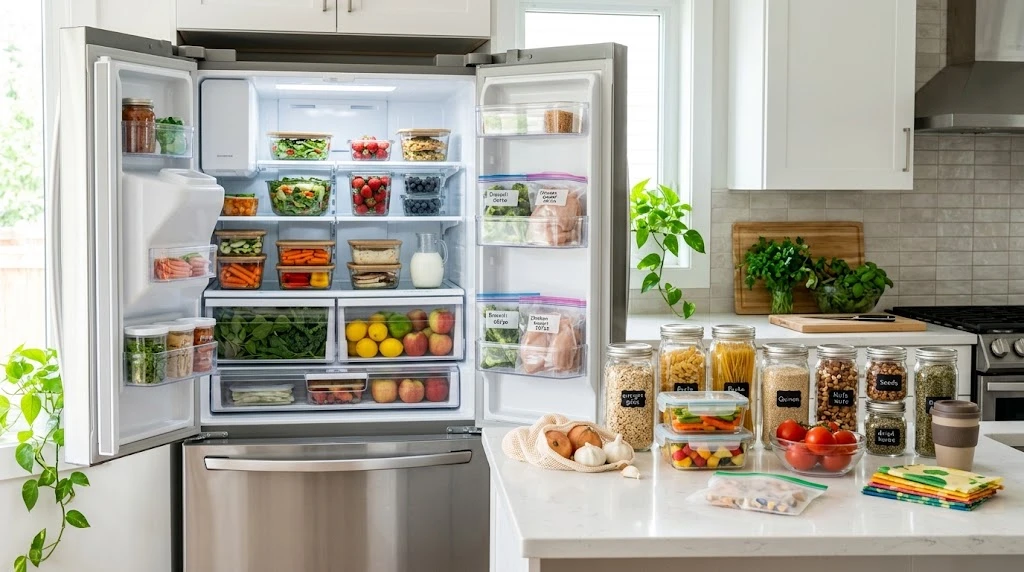
Smart food storage tricks help you keep groceries fresh longer, reduce waste, and save money. Store fruits and vegetables separately, use airtight containers, label everything with dates, and keep your fridge between 35–38°F. Small habits—like wrapping herbs in damp paper towels—make a big difference over time.
Most people lose around $1,500 worth of food every year—not because they buy too much, but because they store it wrong. Smart food storage tricks can close that gap fast. Once you know where each item belongs and why, you stop throwing away wilted lettuce, soggy strawberries, and freezer-burned meat.
This guide covers practical, proven methods for your fridge, freezer, and pantry. No complicated tools required.
Why Proper Food Storage Actually Matters

Food spoils because of bacteria, moisture, ethylene gas, and temperature. When you understand these four factors, storage stops feeling like guesswork.
Ethylene is a natural gas that fruits and vegetables release as they ripen. Some produce—like apples, bananas, and avocados—release a lot of it. Others, like broccoli, lettuce, and carrots, are highly sensitive to it. Store them together and the sensitive ones spoil in days.
Temperature matters just as much. Your fridge should sit between 35°F and 38°F (1.6°C–3.3°C). Warmer than that and bacteria multiply faster. Colder and you risk freezing delicate items like leafy greens.
Moisture is a double-edged factor. Some foods need it to stay crisp. Others rot the moment they get wet. Getting this balance right is where most people go wrong.
Smart Food Storage Tricks for Your Refrigerator
Keep the Temperature Consistent
The door of your fridge is the warmest spot. It fluctuates every time you open it. Avoid storing milk, eggs, or leftovers there. Those items belong on the middle or upper shelves where the temperature stays steady.
Raw meat goes on the bottom shelf, in a sealed container or on a tray. This prevents juices from dripping onto other foods. It also keeps the meat at the coldest part of the fridge.
Separate Your Produce
This is one of the most effective food storage tricks you can use right now. Keep ethylene-producing fruits in their own drawer or bag. Keep ethylene-sensitive vegetables—broccoli, spinach, peppers, cucumbers—far away from them.
Most refrigerators have two crisper drawers for a reason. Use one for fruit, one for vegetables. Adjust the humidity setting too. High humidity works best for vegetables. Low humidity suits fruits.
Store Herbs Like Flowers
Fresh herbs last much longer when you treat them like a bouquet. Trim the stems, place them in a small jar of water, and keep them upright in the fridge. Cover the tops loosely with a plastic bag. Basil is the exception—it prefers room temperature and turns black in the cold.
Softer herbs like parsley, cilantro, and mint can last two to three weeks this way instead of a few days.
Use Airtight Containers for Leftovers
Air is the enemy of leftovers. When you transfer cooked food into an airtight container, you slow oxidation and bacterial growth at the same time. Glass containers work better than plastic for acidic foods like tomato-based dishes—they don’t absorb odors or stain.
Label every container with the date before it goes in. A simple piece of masking tape and a marker takes five seconds and saves you from playing the “when did I make this?” guessing game later.
Smart Freezer Tricks That Preserve Quality
Freeze Food in Flat Portions
When you freeze soups, sauces, or ground meat in flat portions inside zip-lock bags, they take up less space and thaw faster. Lay the bags flat until frozen, then stack them like files. You can fit far more into a freezer this way.
Portioning before freezing is equally important. Freeze meals or ingredients in amounts you’ll actually use in one go. Refreezing thawed food degrades texture and increases bacterial risk.
Blanch Vegetables Before Freezing
Raw vegetables don’t freeze well. Enzymes continue working inside them even at freezing temperatures, which breaks down color, texture, and nutrients over time. Blanching—briefly boiling vegetables and then plunging them into ice water—stops those enzymes cold.
Blanch broccoli, green beans, peas, and spinach before freezing. They’ll look and taste significantly better after months in the freezer compared to vegetables frozen raw.
Remove as Much Air as Possible
Freezer burn happens when air reaches the surface of frozen food. It doesn’t make food unsafe, but it ruins the texture and flavor. Squeeze out as much air as you can from freezer bags before sealing. If you freeze meat frequently, a vacuum sealer is worth the investment—it extends freezer life from a few months to well over a year for most proteins.
Label With the Date and Contents
Frozen food becomes unidentifiable fast. Everything looks the same once it’s solid and frosted. Write the item and the date on every bag or container before it goes in. A standard home freezer keeps food safe indefinitely, but quality drops after three to six months for most items—so knowing the date helps you use older stock first.
Pantry Storage Tricks That Extend Shelf Life
Store Dry Goods in Sealed Containers
Flour, rice, oats, pasta, and sugar all absorb moisture from the air. That moisture leads to clumping, mold, and pantry pests like weevils. Transfer dry goods from their original packaging into sealed glass or BPA-free plastic containers as soon as you bring them home.
This also keeps your pantry organized. You can see exactly how much of each item you have at a glance, which prevents double-buying.
Keep Potatoes, Onions, and Garlic in the Dark
These three items spoil faster when exposed to light. Potatoes exposed to light turn green and develop solanine, a mildly toxic compound. Onions and garlic sprout quickly in warmth and light.
Store them in a cool, dark, well-ventilated spot—not the fridge. Potatoes and onions also release gases that make each other spoil faster, so keep them in separate bins.
Don’t Refrigerate These Foods
Some foods actually degrade in the fridge. Tomatoes lose their flavor and develop a mealy texture when chilled. Bread goes stale faster in the fridge due to a process called retrogradation—it’s better stored at room temperature or frozen. Coffee beans absorb fridge odors and moisture, which ruins the flavor.
Honey never needs refrigeration—it’s naturally antimicrobial and stays stable at room temperature indefinitely. Same goes for whole, uncut melons.
How to Reduce Food Waste With Better Habits
The FIFO Rule
FIFO stands for First In, First Out. It’s a simple rule used in professional kitchens: put newer groceries at the back of the shelf and move older items to the front. You use what’s closest to expiring first, which dramatically cuts down on waste.
Apply this every time you unpack groceries. It takes an extra two minutes and can save you hundreds of dollars over the course of a year.
Do a Weekly Fridge Audit
Pick one day each week—Sunday works well—to check what’s in your fridge. Use up anything that’s close to turning before you plan new meals. This habit alone can reduce household food waste by 30 to 40 percent according to research from the Natural Resources Defense Council.
It also makes grocery shopping easier. You stop buying duplicates and plan meals around what you already have.
Use Produce Before It Turns
Slightly overripe bananas are perfect for smoothies or banana bread. Wilting spinach holds up fine in a cooked dish even after it’s too limp for a salad. Soft tomatoes make excellent sauce. Learning to recognize when produce is past its peak for raw eating but still perfectly fine for cooking extends your food by days.
This mindset shift—from “is this fresh enough to eat raw?” to “what can I make with this?”—is one of the most practical food storage habits you can build.
The Bottom Line
Smart food storage tricks aren’t complicated. They’re a set of small, consistent habits—keeping the fridge at the right temperature, separating produce, labeling everything, and using the FIFO system. Each one takes under a minute to apply. Together, they keep your food fresh longer, reduce what you throw away, and stretch your grocery budget further. Start with one or two changes this week and build from there.

Comments are closed.