
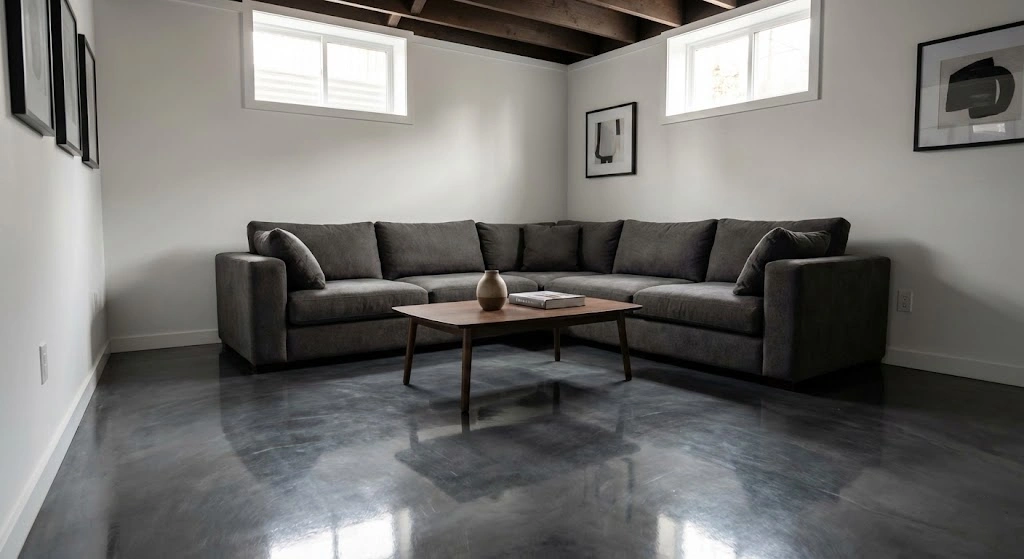
A polished concrete basement floor is created by grinding and sealing an existing concrete slab to a smooth, glossy finish. It resists moisture, reduces mold risk, and costs $3–$12 per square foot. It’s one of the most durable, low-maintenance flooring options available for below-grade spaces.
Your basement has a lot of potential — and the floor is where it all starts. Most homeowners look down at that rough, grey slab and see a problem. But the truth is, that existing concrete is already your foundation for one of the best flooring choices you can make: a polished concrete basement floor.
This isn’t just a trend. It’s a practical, long-lasting solution that works well in spaces where other flooring materials consistently fail. Here’s everything you need to know about it.
What Is a Polished Concrete Basement Floor?

Polished concrete is exactly what it sounds like — your existing concrete slab, ground down and buffed up using a series of diamond abrasives until it achieves a smooth, refined surface. The process doesn’t require you to lay new flooring on top of what’s already there. You’re working with the slab itself.
The polishing process uses progressively finer diamond abrasives and optional dyes or stains to customize the appearance. You can choose from a matte, satin, or high-gloss finish depending on the look you want. A high-gloss finish uses 800, 1500, or even 3000 diamond grit to achieve a near mirror-like surface.
For basements specifically, the appeal goes beyond looks. Unlike traditional flooring options that often struggle with basement humidity, polished concrete provides a resilient and long-lasting solution. Its natural resistance to moisture and stains makes it particularly well-suited for below-grade spaces.
Why Polished Concrete Works So Well in Basements
Basements are tough on flooring. They sit below grade, which means they deal with ground moisture, humidity shifts, and temperature changes that above-ground rooms don’t face. Most flooring materials weren’t built for that environment — polished concrete was.
The polishing process includes applying a chemical densifier that reacts with the concrete to fill pores and harden the surface, reducing its ability to absorb water. This minimizes water seepage and reduces the risk of musty odors or damp spots in the basement.
Carpet traps moisture and odors. Vinyl and tile can crack or lift when the slab shifts. Hardwood warps. By contrast, a polished cement basement floor offers a permanent solution that avoids these pitfalls. With proper care, it maintains its beauty and functionality for decades.
There’s another benefit most people don’t think about: air quality. Unlike flooring options such as wood, carpet, or vinyl laminate, polished concrete floors are VOC-free. Due to their unique installation process, polished concrete floors do not release volatile organic compounds into the air. This makes them ideal for residential projects, especially households with children and pets.
The Polishing Process: What Actually Happens
If you’ve never seen this process before, it might surprise you. It’s not a quick coat of paint or a snap-on tile job. It’s a methodical, multi-step process that transforms raw concrete into a finished surface.
First, the contractor inspects and cleans the slab. Any cracks, divots, or surface damage get repaired before grinding starts. This step matters — skipping it shows up in the final finish.
Once the grinding process is complete, progressively finer diamond abrasives hone the concrete’s surface. This step smooths out the scratches left by the coarser grits and brings out a subtle sheen in the concrete. The contractor runs multiple passes with increasing grit levels, working toward whatever finish level you’ve chosen.
The final stage involves polishing the concrete until you achieve the level of shine you want. Once you’ve achieved the desired polish, a sealer is applied to protect the surface and enhance its appearance. The sealer helps the concrete resist stains and makes the floor easier to maintain.
The whole job can take anywhere from one to several days depending on the size of your basement and the condition of the slab.
How Much Does a Polished Concrete Basement Floor Cost?
Cost is usually the first question homeowners ask, and it’s a fair one. The good news is that polished concrete competes well against almost every other flooring option on the market.
You can expect to pay between $3 and $12 per square foot for polished concrete, depending on your location and the complexity of the project. Polished concrete pricing is dependent upon how many levels of grinding are needed to get the floor to a smooth surface. The cost can go up depending upon decorative effects applied, such as staining or scoring.
On average, homeowners spend $4,500 on polished concrete floors, with costs ranging from $1,000 to $8,000. For larger or more complex projects, the total cost can reach up to $32,000.
A few things drive the price up or down. Larger basements cost more in total but often less per square foot because contractors can use bigger equipment. Each additional grind adds $3 to $5 per square foot to your project costs, so the glossier the finish, the higher the price. If you want staining or custom scoring patterns, budget more.
Compare that to hardwood, which typically starts over $10 per square foot, or ceramic tile, which can cost four times more than basic polished concrete. In addition to being less expensive initially, there is a huge difference in long-term costs when it comes to maintenance and replacement.
Finish Options and Design Possibilities
One common misconception is that polished concrete only comes in plain grey. That’s not true at all. You have real design choices here.
A cream finish offers the smoothest and most uniform look, with little to no aggregate exposure. This is achieved through minimal grinding, which preserves the top layer of the concrete. A salt and pepper finish exposes fine aggregate, giving the surface a slightly textured look and is a popular choice for both commercial and residential spaces.
You can also add color. Staining your polished concrete floors costs between $2 and $10 per square foot. The stain penetrates the concrete surface, bonding permanently for a durable, long-lasting effect. Acid stains create a mottled, earthy look. Water-based stains give you more color control if you want something bolder or more uniform.
For homeowners who want the warmth of wood without the risk of moisture damage, stamped concrete can mimic the look of hardwood planks. Concrete floors don’t fall victim to scratches and gouges, and moisture can cause hardwood floors to warp or split — issues that polished concrete avoids entirely.
Dealing with Basement Moisture the Right Way
Moisture is the number one concern when it comes to basement flooring, and it deserves a dedicated conversation. Polished concrete handles moisture better than most alternatives, but it’s not a magic fix if you have active water intrusion.
Before any polishing work begins, a good contractor will test for moisture. Moisture testing before installation is very important because the surface cannot be polished if it is already wet. Moisture meters or relative humidity testing tools are used to measure humidity in concrete flooring.
If your basement sweats during humid summers, a quality sealer makes a big difference. Using a penetrating sealer keeps moisture out of the concrete. A concrete densifier works first as a primer to fill pores and voids, making concrete stronger, harder, less porous, and less susceptible to sweating.
For long-term protection in humid climates, resealing polished concrete every 8–12 months is important, especially in coastal or humid climates. Sealers create a protective barrier over the surface to protect it from moisture. Running a dehumidifier and keeping humidity between 30% and 50% also helps the floor perform its best year-round.
How to Maintain a Polished Concrete Basement Floor
Maintenance is one of the biggest advantages of this flooring type. There’s no waxing, no refinishing, no replacing individual planks. The routine is straightforward.
Polished concrete floors are easy to clean, thanks to their smooth finish. You only need a vacuum and a damp microfiber mop for regular maintenance. For a deeper clean, use a pH-neutral cleaner mixed with warm water. Avoid ammonia, bleach, or vinegar — these can dull, discolor, or etch the flooring.
In high-traffic areas of your basement, adding rugs or mats gives the floor extra protection and makes the space feel warmer underfoot. Concrete holds cold temperatures, so a rug near a seating area or workspace goes a long way.
Is a Polished Concrete Basement Floor Worth It?
For most homeowners, yes — the numbers and the practicality line up. You’re working with a floor that’s already there, avoiding the cost and waste of covering it up. You’re getting a surface that resists moisture, doesn’t harbor allergens, and doesn’t need replacement every decade.
Polished concrete floors increase home value by offering a modern, sleek appearance and exceptional durability. A professionally installed floor not only enhances visual appeal but also minimizes maintenance expenses, making the property more attractive to prospective buyers.
The upfront cost is real, but so is the return. A polished concrete basement floor is the kind of upgrade that pays for itself — in durability, in reduced maintenance time, and in a space that actually looks good enough to use every day.
If you’re ready to stop ignoring that basement slab, now’s the time to get a few quotes from local concrete polishing contractors and see what your floor is really capable of.


Comments are closed.