
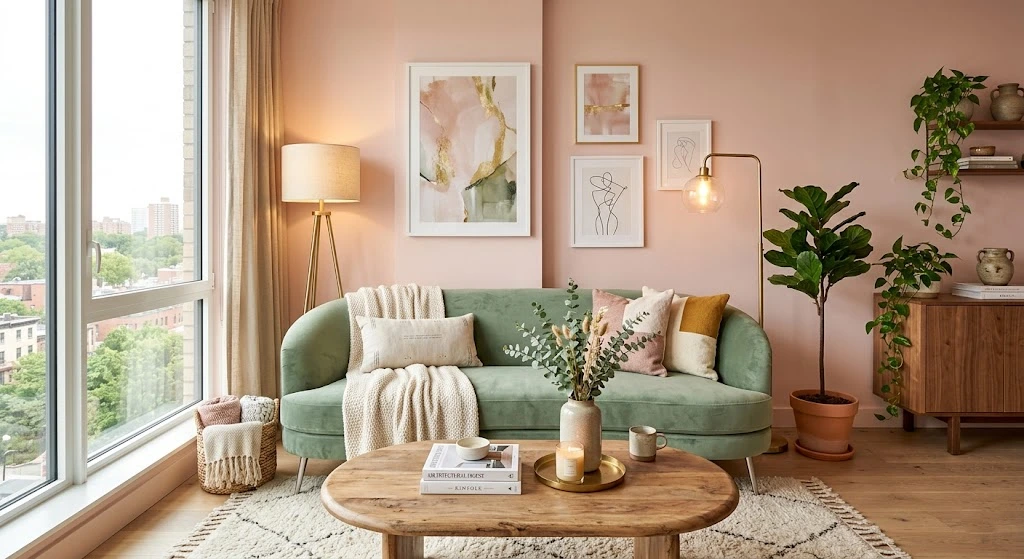
A pink green living room paint makeover combines the warmth of pink with the calm of green to create a cozy, vibrant space. Choose complementary shades like blush and sage or emerald and coral, balance the colors across walls and accents, and style with natural textures for a polished, inviting result.
Have you ever walked into a room and just felt something was off? Maybe the walls felt cold or the space seemed tired, like it needed a little life breathed back into it. That was exactly where one Chicago apartment owner found himself — staring at plain white walls with nothing but a hand-me-down coffee table and a dream for something warmer. He picked up a paintbrush, chose a bold pink and green combo, and completely transformed his living room. The result? A space so stunning that it went viral online.
That story is not a one-off. A pink green living room paint makeover is one of the most talked-about home refresh ideas right now — and for good reason. This color pairing brings together the warmth of pink and the calm of green in a way that feels both exciting and livable. Whether you are working with a tiny apartment or a spacious family room, this guide walks you through everything you need to know to pull it off beautifully.
Why Pink and Green Work So Well Together

Here is the science behind why this combo feels so natural. Pink and green sit nearly opposite each other on the color wheel, making them complementary colors. That means they create contrast without clashing — they actually make each other look better when placed side by side.
Think about it in nature. Picture pink cherry blossoms against a backdrop of green leaves, or coral wildflowers poking through a grassy field. There is a reason your eye instantly loves that image. Your living room can capture that same feeling.
From a color psychology angle, pink delivers warmth, comfort, and a cheerful energy. It has this interesting ability to feel both playful and sophisticated depending on which shade you choose. Green, on the other hand, brings calm and a connection to the natural world. Interior designers often say green makes people feel grounded and at ease. Put them together and you get a room that feels welcoming and alive — perfect for a space where you hang out, relax, and entertain.
Choosing the Right Shades for Your Personality and Space
Not all pinks and greens play well together. The key is picking shades that share similar undertones. A warm pink — like blush or coral — pairs beautifully with a warm green like sage, olive, or eucalyptus. A cooler pink — think dusty rose or magenta — works better alongside a cooler green like mint, teal-green, or emerald.
Here are some tried-and-true pairings that designers love:
Blush Pink + Sage Green: This is the combo that feels the most universally approachable. Sage green is calm and earthy, while blush pink adds just enough warmth to make the room feel cozy. One designer’s approach is to paint three walls in pale blush and choose sage for the accent wall behind the sofa — it creates depth without overwhelming the room. This pairing works especially well in smaller living spaces.
Rose Pink + Olive Green: If you want something that feels a little more editorial and less expected, rose and olive is a stunning choice. The rose quartz on your walls provides a warm, welcoming backdrop, and olive furniture grounds the space with a modern, fresh energy.
Hot Pink + Emerald Green: This is the bold move. It is not for everyone, but when done right — with careful balancing and strong neutrals — it reads as glamorous and confident. Think of it as your living room making a statement.
One real-life example that went viral on Apartment Therapy: Alex Hinand painted his Chicago apartment walls in Benjamin Moore’s Rose Silk (a warm soft pink) and used Benjamin Moore’s Vintage Vogue (a rich olive green) on the trim and fireplace mantel. The result looked like a completely different apartment — warm, collected, and full of personality.
How to Plan Your Paint Layout Before You Open a Can
Planning your paint layout before you touch a wall saves you time, money, and a lot of frustration. Start by deciding which color gets the starring role and which one supports it. In most cases, one shade covers the walls (your dominant color) while the other appears in trim, an accent wall, or in furniture and decor.
If you go with pink walls, the room feels instantly warmer and more intimate. Green then comes in through the trim, window frames, or a single feature wall behind your main seating area. This creates a natural focal point without making the space feel like a candy store.
If you flip it — green walls with pink accents — the room takes on a spa-like, nature-inspired quality. Eucalyptus green walls with soft pink trim and baseboards is a combination that works especially well in open-plan layouts because the green provides a calm, restful backdrop.
For smaller rooms, try a split approach: paint the lower third of the wall a muted green and the upper two-thirds a dusty pink. This visual trick creates the illusion of higher ceilings and a more open feel. Another option that works well in compact spaces is blush walls on three sides with one sage green accent wall — it adds depth without shrinking the room.
Always buy sample pots before you commit to full cans. Paint a large swatch — at least 12 x 12 inches — and observe it at different times of day. Morning light, afternoon sun, and evening lamp light all change how pink and green read on your walls. A color that looks perfect at noon can shift surprisingly under artificial lighting.
Pro Tips for a Flawless Pink and Green Paint Job
The quality of your tools matters more than most people expect. Alex Hinand, the Chicago designer behind one of the most viral pink and green makeovers online, gives straightforward advice: invest in high-quality paint and high-quality brushes. Cheap rollers shed fibers into wet paint, adding unwanted texture to your walls. A few extra dollars on better supplies prevents a lot of headaches.
Always paint in daylight whenever you can. Natural light gives you the most accurate read on your color as you go. If you have to work in the evenings, set up bright, warm-white lighting so you can catch any uneven patches before they dry.
For the finish, choose eggshell or satin for your living room walls. These finishes are durable enough to wipe clean, which matters in a high-traffic space, but they are not so reflective that they highlight every little imperfection in your walls. Flat finishes absorb light and hide flaws but are harder to clean, so they work better in low-traffic areas.
When painting trim in a contrasting color — like going from pink walls to green trim — use painter’s tape carefully and take your time on the edges. One of the best techniques is to press the tape down firmly with a putty knife to prevent bleed-through, then remove it while the paint is still slightly wet for a clean, crisp line.
Furniture and Decor That Completes the Look
Your walls do a lot of the heavy lifting, but the furniture and soft furnishings you choose either bring the palette together or throw it off. The good news is that pink and green are both incredibly versatile — they work with wood, metal, linen, velvet, rattan, and marble.
Natural wood tones are your best friend in a pink and green room. A warm walnut coffee table or oak shelving grounds the palette and keeps it from feeling too sweet or too trendy. If you have light pine or blonde wood furniture, it pairs beautifully with both sage green and blush pink walls.
For sofas and main seating, think about neutral linen in off-white or warm beige. This gives the colors on your walls and in your accessories room to breathe. If you want to go bolder with upholstery, a sage green velvet sofa against blush pink walls creates an incredibly luxurious look. Interior designer Melanie Jade describes exactly this combination in her own living room — a dark green sofa paired with a complementary pink sofa — and says the two colors together felt effortlessly styled.
Bring in gold or brass hardware and accents to add warmth. A gold-framed mirror, brass lamp base, or copper-toned candleholders all work beautifully with both pink and green. They add a touch of refinement without making the room feel overdone.
Throw pillows, rugs, and artwork are where you get to have fun and layer the palette together. A patterned rug that pulls in both pink and green — even in muted tones — helps tie the room together visually. Curtains in a dusty rose linen soften the light beautifully if your walls are green. And do not underestimate the power of houseplants. Real greenery adds living texture that synthetic decor simply cannot replicate.
Common Mistakes to Avoid in a Pink Green Makeover
The most common mistake people make is choosing shades with mismatched undertones. A warm, peachy pink next to a cool, blue-toned mint will fight each other. Always compare your paint chips side by side in the actual room before buying full cans.
Another mistake is going too dark in a small room. If your living room is compact, using two bold, saturated colors can feel overwhelming and close the space in. In smaller rooms, opt for lighter, more muted versions of your chosen shades and let the contrast come from decor rather than wall color.
Some people also forget about lighting entirely. Natural sunlight enhances both pink and green beautifully, but if your room gets very little natural light, warm-toned bulbs help pink shades stay rosy rather than turning muddy. Cool LED lighting can shift blush pink toward lavender or gray, which is rarely the effect anyone wants.
Finally, resist the urge to match everything perfectly. A room where every pink item is the exact same shade and every green piece matches perfectly can feel stiff and artificial. Let the colors appear in different textures, finishes, and intensities throughout the room. That layered quality is what makes a space feel curated and lived-in rather than staged.
Budget-Friendly Ways to Try the Trend Without a Full Commitment
Not ready to paint all four walls? You do not have to. Some of the most effective pink and green living rooms keep it subtle — a single painted accent wall, a green-painted interior door, or a blush pink ceiling above white walls can create a big visual impact without a huge investment.
Painting just the trim and baseboards in an olive green while keeping walls neutral is another low-commitment way to test the combination. It reads like a full makeover but only uses a fraction of the paint. Alex Hinand’s striped threshold between two rooms — created with painter’s tape and a small roller — is another creative, budget-conscious idea that adds personality and playfulness to the space.
Thrifting and secondhand shopping can help you introduce the color palette through furniture and accessories at a fraction of retail prices. A chartreuse accent chair, a vintage pink lampshade, or a sage green ceramic vase can all bring the combination to life without major spending. Alex furnished most of his viral pink and green apartment through Facebook Marketplace, thrift stores, and neighborhood alleys.
Ready to Transform Your Living Room?
A pink green living room paint makeover is one of those projects that sounds intimidating until you see it come together — and then you wonder why you waited so long. The combination works because it mirrors something deeply familiar: the colors of the natural world around us. Pink flowers, green leaves. Blush sunsets over grassy hills. Your living room gets to hold a little of that beauty every day.
Start with a few paint swatches, observe them in your actual space across different lighting conditions, and trust your instincts. Whether you go bold with emerald and fuchsia or keep it gentle with sage and blush, the most important thing is that the space feels like you. Grab your paintbrush and start your makeover today — your living room is waiting.
Comments are closed.