
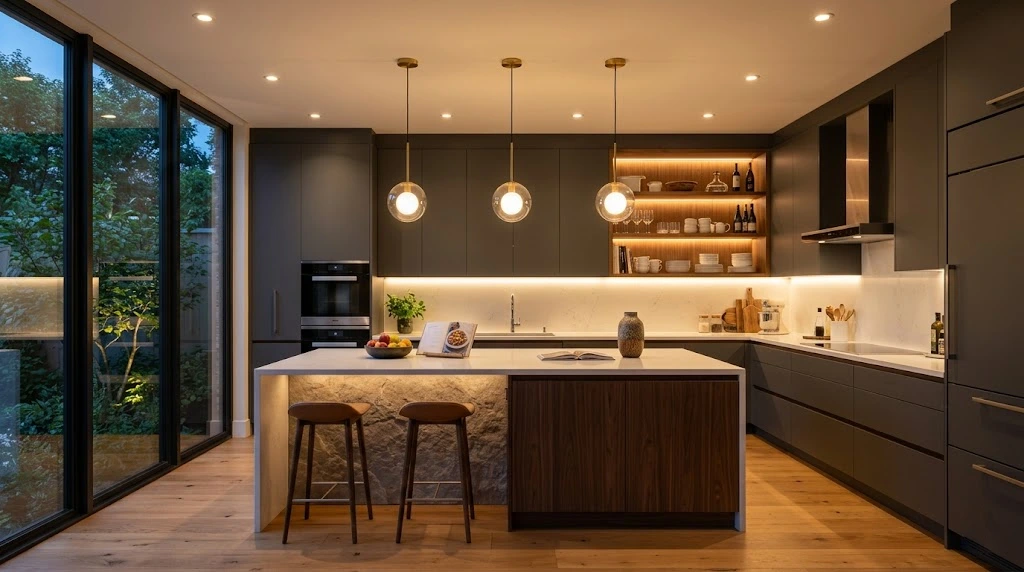
Modern kitchen lighting ideas combine ambient, task, and accent lighting into one layered plan. The best setups use pendant lights over islands, LED strips under cabinets, and smart dimmers to control the mood. Getting this right makes your kitchen look stylish and work better every single day.
Good kitchen lighting does a lot more than help you see while you cook. It sets the mood, shows off your design, and makes the whole space feel put together. Yet most people treat it as an afterthought — picking one overhead fixture and calling it done. That approach leaves your kitchen feeling flat and dull, no matter how beautiful the cabinets are.
The good news? Getting lighting right is not complicated. You just need to know what works, what’s trending, and how the pieces fit together. This guide covers the best modern kitchen lighting ideas you can use right now — whether you’re doing a full renovation or just want a quick refresh.
What Is Layered Lighting and Why Your Kitchen Needs It

The secret to a well-lit kitchen is layering: ambient fittings bathe the room in an even glow, task lights focus bright beams on counters and sinks, while accent pieces add sparkle to shelving and backsplashes. When you get this mix right, your kitchen handles everything — from bright morning breakfasts to quiet evening dinners — without you touching a single switch.
Think of it in three parts. Ambient lighting is your base layer — it fills the room with general light. Task lighting zooms in on specific work areas so you can chop, cook, and read recipes without straining your eyes. Accent lighting is the finishing touch — it highlights shelving, artwork, or architectural details that deserve attention. A mix of task, ambient, and accent lighting is best for kitchens, providing the right illumination for cooking, meal prep, and dining while creating a warm and inviting atmosphere.
Most kitchens are missing at least one of these layers. If yours feels too dark in some spots and too harsh in others, that’s why.
Pendant Lights Over the Island: The Classic That Still Wins
Pendant lights are among the most popular choices in kitchens. Above a kitchen island or suspended above a breakfast nook, they add a sculptural yet ambient element to your design. They’re also one of the easiest ways to make a big visual statement without touching your walls or ceiling.
One of the biggest lighting trends right now is statement pendant lights above kitchen islands. Oversized fixtures with round lamp shades or sleek drum shades are especially popular. These not only provide task lighting but also serve as a visual focal point for the room.
Here’s something designers are doing differently these days. Many are moving away from the traditional two-pendant rule that’s held favor for years, opting for three or four fixtures instead. This approach adds charm and interest to a kitchen. On a long island, a row of three or five smaller pendants looks far more intentional than one oversized fixture struggling to cover the whole surface.
When choosing materials, glass and metal are safe picks for longevity. If you fall in love with a fixture that doesn’t offer enough illumination on its own, add recessed lighting in the ceiling to fill the gap. That way you get the look you want without sacrificing function.
Under-Cabinet Lighting: Small Change, Big Impact
Under-cabinet lights are one of the most underrated upgrades in any kitchen. They sit beneath your upper cabinets and shine directly onto your countertop — exactly where you need light most during meal prep.
LED strips remain a top choice for under-cabinet lighting. They’re energy-efficient and can be dimmed to suit your mood, from bright task lighting to a soft evening glow. In 2026, this type of lighting does double duty — it’s practical during the day and creates a warm, ambient effect at night when you turn the overhead lights down.
Under-cabinet lights make meal prep easier and add a warm, ambient glow in the evenings when overhead lights feel too harsh. If you want to take it a step further, toe-kick lighting — mounted along the base of your cabinets — adds a subtle, contemporary touch. It also works as a soft nightlight for those late-night trips to the kitchen.
For the best result, go with warm white LEDs in the 2700K–3000K range. They make countertops and wood tones look rich and inviting rather than washed out.
Smart Lighting: Control Your Kitchen’s Mood With a Tap
Smart lighting has moved well past the novelty stage. Many 2026 fixtures now come with built-in smart technology, so you can easily control them via an app or voice assistant. You can adjust brightness, switch between warm and cool light, and set schedules — all without getting off the couch.
The slickest kitchens now respond to a quick voice command and instantly dial in the perfect brightness and color temperature. These systems work with Apple Home, Google Home, and Alexa. Cool white light works well for focused cooking. Warm white feels better for dinner parties or relaxed mornings.
The practical side is just as appealing. Smart dimmers give you total control over your layered lighting plan. You can run task lights at full brightness while cooking and then bring everything down to a gentle glow once the meal hits the table. The lighting in 2026 kitchens combines modern design with advanced technology — layered lighting systems featuring dimmable fixtures and task lighting are key.
Statement Fixtures and Bold Design Choices
Not every kitchen lighting decision is about function. Sometimes you just want something that looks incredible. Ultra-modern kitchen lighting fixtures are defining current trends with their sleek, sculptural designs and artistic appeal — bold statement pieces like geometric pendants, slimline LED strips, and metallic accents create a clean, futuristic look.
Gold finishes are also making a strong return. Unlike the flashy gold of the past, the current trend embraces a more subdued tone with matte or antique finishes, allowing the warm hues of gold to complement various kitchen styles. Pair a brushed gold pendant with white cabinetry and you’ve got a combination that feels timeless without trying too hard.
Bubble chandeliers have surged in popularity due to their unique and captivating design that blends contemporary aesthetics with a touch of playfulness — these fixtures, often made up of glass orbs or spheres, offer a refreshing departure from traditional chandelier designs. If you want something a little more grounded, rattan and natural materials are a strong alternative. There’s a clear shift toward more earthy tones and natural materials for lighting fixtures, including rattan, linen fabrics, and combinations with marble or concrete.
Accent Lighting: The Detail That Ties Everything Together
Once you’ve sorted your ambient and task lighting, accent lighting is what makes your kitchen feel finished. It draws attention to the things you actually want people to notice — open shelving, a beautiful backsplash, or a custom range hood.
Placing sconces on either side of a beautiful range hood, using art lights above open shelving, or even placing a light fixture over kitchen windows are all strong ways to use accent lighting with purpose. These small touches signal that the kitchen was designed with intention.
Concealed lighting inside joinery is another approach worth considering. When light sources are hidden inside the cabinetry, shelves glow, alcoves gain depth, and displayed pieces become instant focal points. The effect is clean and modern — you see the light without ever seeing the fixture. Using warm 2700K strips inside timber cabinetry makes the wood grain pop in a way that nothing else quite matches.
How to Pick the Right Lighting for Your Kitchen Style
There’s no single formula, but a few straightforward guidelines make the decision easier. Consider your cabinet color and style when selecting fixtures — warm-toned cabinets often pair best with softer lighting, while modern white or gray cabinets pop under cooler tones.
For modern and minimal kitchens, lean toward sleek metal fixtures, recessed lighting, and hidden LED strips. For farmhouse or transitional kitchens, fabric shades, warm brass, and exposed bulbs feel more at home. If your kitchen sits somewhere in between, mixing two finish tones — say, matte black and brushed brass — adds depth without feeling chaotic.
Layering combines ambient, task, and accent lighting to achieve balance and flexibility. It adapts to different needs and moods and creates depth and sophistication. Start with your ambient layer, then add task lighting above counters and the sink, and finish with accent pieces where you want to draw the eye. That order keeps the planning simple and the result cohesive.
The kitchen is where most of your day happens. It deserves lighting that works as hard as you do — and looks great while doing it.

Comments are closed.