
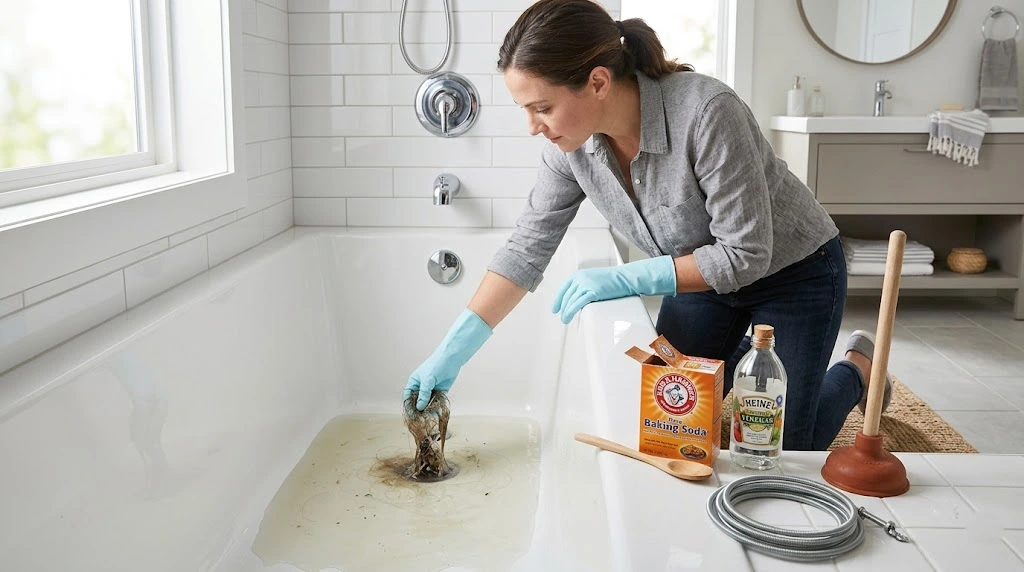
To unclog a bathtub drain without chemicals, start by removing the drain stopper and pulling out visible hair by hand. Then use a plunger, drain snake, or baking soda and vinegar to clear the blockage. Flush with hot water. Most clogs clear within 30 minutes using these simple steps.
You step into the shower, and within a minute the water is already pooling around your ankles. Your bathtub drain is clogged — again. The first thing most people do is reach for a bottle of chemical drain cleaner. But here’s the thing: those products are harder on your pipes than the clog itself.
The good news? You can fix this without any chemicals at all. Most bathtub clogs sit close to the drain opening and respond well to simple, physical methods. This guide walks you through every approach, from quickest to most involved, so you can clear that drain today.
Why Bathtub Drains Get Clogged

Before you fix something, it helps to understand what caused it. The most common culprits are hair and soap scum. We each shed 50 to 100 strands of hair every day, and many of those strands travel straight into the drain. Over time, they twist together and catch soap residue, dead skin, and product buildup — forming a dense, sticky mass that water can barely pass through.
Bath oils, bath bombs, and thick conditioners also contribute. Some of these ingredients don’t fully dissolve. Glitter, flower petals, and undissolved salts settle inside the drain and slowly build a blockage. Even hard water minerals can coat the inside of your pipes and narrow the opening enough to cause slow drainage. Once you know this, the fix becomes a lot more obvious: remove the material, don’t try to dissolve it with chemicals that can damage your plumbing.
Why You Should Skip the Chemical Drain Cleaners
Chemical drain cleaners are not as effective as they appear on the label. A plumbing specialist at Service Force Plumbing explained it well: many drain cleaners simply “wash the hair,” meaning the clog seems to disappear but the hair stays inside the pipe, ready to trap the next wave of debris.
On top of that, these products generate heat as they work. That heat softens PVC pipes and corrodes older metal pipes over time. If you have a septic system, the harsh chemicals kill the beneficial bacteria your system depends on. And the fumes — enough to irritate your eyes and lungs — are a real concern, especially in a small, poorly ventilated bathroom. Skipping chemicals is the smarter move, both for your plumbing and your health.
Step 1: Remove the Drain Stopper and Pull Out the Hair
This is where you start — and honestly, this alone fixes most clogs. Your bathtub drain stopper sits right at the opening, and hair loves to wrap around it. Remove the stopper by unscrewing it or lifting it out, depending on the type your tub has.
Once it’s out, put on a pair of rubber gloves and reach into the drain. Pull out whatever you can grab. It won’t be pretty, but it’s effective. A pair of needle-nose pliers helps if the hair clump sits just out of reach. After you’ve removed what you can, run hot water to see if the drain flows better. You’d be surprised how often this single step is all it takes.
Step 2: Try Boiling Water First
If the drain is still moving slowly after clearing the stopper, boiling water is your next move. It melts soap scum and grease that clings to the inside of the drain. Boil a full kettle, then pour it down the drain in two or three stages — not all at once. Letting it sit for a few seconds between pours gives the hot water time to work through the buildup.
One caution here: skip this method if your tub has PVC pipes. Boiling water can soften and warp plastic pipes. If you’re unsure what kind of pipes you have, use very hot tap water instead. It won’t be quite as effective, but it’s much safer for the plumbing.
Step 3: Use Baking Soda and Vinegar
This is the most popular chemical-free method, and it genuinely works — especially on soap scum and minor hair clogs. Pour one cup of baking soda directly into the drain, then follow it immediately with one cup of white vinegar. The mixture will fizz and bubble as the two react together.
Cover the drain opening with a stopper or a small cloth to keep the reaction working inside the pipe rather than bubbling up and out. Let it sit for 15 to 30 minutes, then flush with a pot of hot water. If the first round doesn’t fully clear the clog, repeat the process. Many plumbers recommend doing this once a month as a maintenance step to prevent buildup before it becomes a real problem.
Step 4: Plunge the Drain
When the water is still sitting in the tub and the baking soda method didn’t cut it, a plunger is your next tool. Make sure you use a flat-bottomed cup plunger, not the bell-shaped kind made for toilets. The cup plunger creates a better seal on a flat drain surface.
Add enough water to the tub to cover the drain opening — this improves suction. Place the plunger directly over the drain and press down firmly to create a seal. Then pump it hard and fast, 10 to 15 times, without breaking the seal. Pull up sharply on the final stroke. The pressure shift can dislodge a clog and send it down the pipe. After plunging, run the water to check the drainage. If it’s still slow, try one more round before moving to the next method.
Step 5: Use a Drain Snake or Wire Hanger
For clogs that sit deeper in the pipe, you need something that can physically reach in and pull the debris out. A drain snake — also called a drain auger — is the right tool for this. You can buy a basic plastic one at any hardware store for just a few dollars.
Feed the snake into the drain opening and push it in slowly until you feel resistance. That’s the clog. Rotate the handle clockwise to help the snake grab onto the hair and debris. Then pull it back out slowly, bringing the clog with it. Dispose of the material and flush the drain with hot water.
If you don’t have a drain snake, a wire coat hanger works in a pinch. Straighten it out and bend one end into a small hook using needle-nose pliers. Send the hook end into the drain, feel around for the clog, and pull it back out. It’s not as flexible as a proper snake, but it gets the job done for clogs near the surface.
Step 6: Try a Wet/Dry Vacuum
Not many people think of this, but a shop vac — also called a wet/dry vacuum — is surprisingly effective on stubborn clogs. Remove the drain stopper or strainer, then insert the end of the vacuum hose into the drain opening. Seal the gap between the hose and the drain with a damp rag to concentrate the suction.
Turn the vacuum to its suction setting and run it for a minute or two. The force can pull the clog right out of the pipe. If it doesn’t clear immediately, try switching to the exhaust setting for 10 seconds, then back to suction. Once you hear the clog clear through the hose, turn off the vacuum and flush the drain with hot water to clear any remaining debris.
When to Call a Plumber
Most bathtub clogs respond to at least one of the methods above. But if you’ve worked through all of these steps and the water still won’t drain — or if other fixtures like your sink or toilet are also backing up — the blockage is likely deeper in your main drain line. That’s beyond DIY territory.
Multiple backed-up fixtures in the same bathroom signal a problem farther down the pipe, not just in the tub drain itself. At that point, a plumber with a motorized auger or hydrojetting equipment can clear it properly without causing damage.
How to Prevent Future Clogs
Clearing a clog once is satisfying. Not dealing with one again is even better. A few small habits keep your drain running freely.
Add a mesh drain strainer over the tub drain. It catches hair before it enters the pipe and costs less than $10. Brush your hair before showering so fewer loose strands go down the drain. After every bath or shower, run hot water for 30 seconds to flush residue down the line before it can settle. Once a month, do the baking soda and vinegar flush as routine maintenance. These steps together take almost no time and save you from dealing with a stubborn clog later.
A clogged bathtub drain is one of those problems that feels bigger than it is. In most cases, a pair of gloves, a cup of baking soda, or a $5 drain snake handles it completely. Start with the simplest fix and work your way up. Your drain will be clear, your pipes will be intact, and you won’t have spent a cent on harsh chemicals.

Comments are closed.