
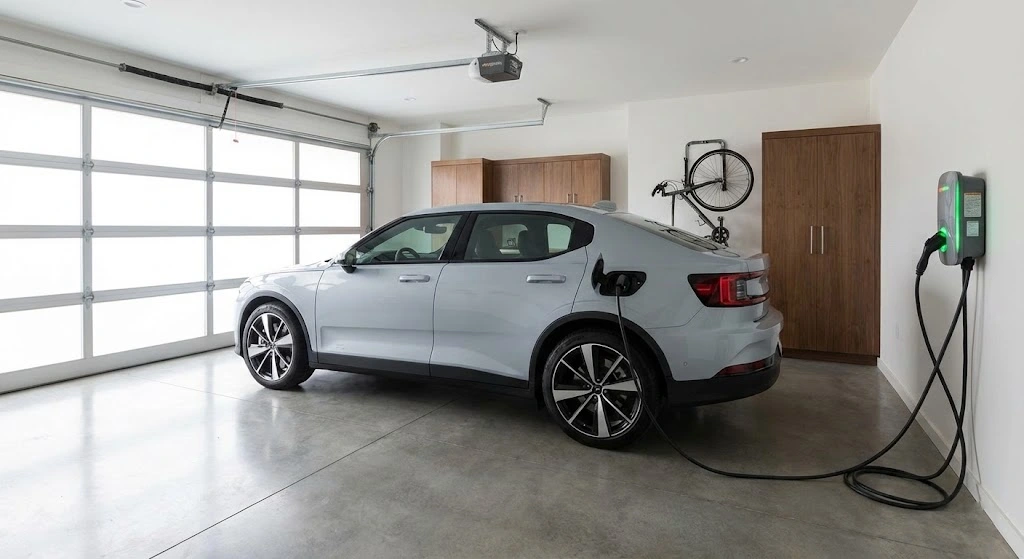
Installing an EV charger at home involves choosing between Level 1 or Level 2 charging, assessing your electrical capacity, obtaining permits, hiring a licensed electrician, and completing inspections. Level 2 chargers cost $800–$2,500 and charge your vehicle overnight for maximum convenience.
So you’ve joined the electric vehicle revolution—congrats! Now comes the fun part: figuring out how to keep that beautiful machine charged and ready to roll. Installing an EV charger at home might sound complicated, but trust me, it’s way easier than you think. Let me walk you through everything you need to know.
Understanding Your Charging Options

Before we dive into the installation process, let’s talk about what kind of charger you actually need. Not all chargers are created equal, and understanding the difference will save you time, money, and a whole lot of confusion.
Think of Level 1 charging as the slow-cooker method. You plug your EV into a regular 120-volt wall outlet—the same one you’d use for your phone or laptop. It’s convenient because you don’t need any special equipment, but here’s the catch: it’s painfully slow. We’re talking about two to five miles of range per hour of charging. If your battery is completely dead, you could be waiting up to 24 hours for a full charge. Level 1 works fine if you’re only driving short distances around town, but most EV owners quickly realize they need something faster.
Level 2 charging is where things get interesting. These chargers use 240-volt power, just like your electric dryer or oven. The difference is night and day. A Level 2 charger can add 25 to 40 miles of range per hour, which means you can fully charge most EVs in four to eight hours. Park your car in the evening, plug it in, and wake up to a full battery. That’s the kind of convenience that makes EV ownership truly practical.
You might also hear about Level 3 or DC fast chargers, but those are only found at commercial charging stations. They’re incredibly fast—charging your battery to 80% in about 30 minutes—but they require industrial-level electrical infrastructure. They’re not suitable for home installation and would cost tens of thousands of dollars anyway.
Checking Your Home’s Electrical Capacity
Here’s where we get a bit technical, but stay with me because this part is crucial. Your home has a certain amount of electrical capacity, and adding an EV charger is like adding another major appliance. You need to make sure your electrical system can handle it.
Take a look at your main electrical panel. It’s usually in your garage, basement, or utility room. The main switch at the top should have a number on it—typically 100, 150, or 200 amps. This number tells you how much total electrical power your home can handle at once. If you’ve got 200 amps, you’re in great shape. Most homes with this capacity can easily support a Level 2 charger.
Even if you have a 100-amp panel, you might still be okay, depending on what other appliances you’re running. The key is to check if you have two empty slots for a double-pole circuit breaker in your panel. If you do, you’re probably good to go. If not, you might need a panel upgrade.
Here’s an important rule to remember: your circuit breaker needs to be sized at 125% of your charger’s amperage. So if you’re installing a 40-amp Level 2 charger, you’ll need a 50-amp circuit breaker. This safety margin prevents overloads and keeps everything running smoothly.
Getting Permits and Following the Rules
I know, I know—permits sound boring and bureaucratic. But here’s the thing: they’re actually there to protect you. Most cities and counties require an electrical permit for installing a new EV charger circuit. This ensures your installation meets the National Electrical Code and local building codes.
The permit process typically costs between $50 and $300, depending on where you live. Some states, like California, have streamlined the permitting process specifically for EV chargers to make it faster and easier. Your licensed electrician can usually handle the entire permitting process for you, which takes one major headache off your plate.
There’s one exception to the permit rule: if you’re just plugging a Level 1 charger into an existing outlet that already meets the manufacturer’s requirements, you usually don’t need a permit. But if you’re adding any new wiring or installing a Level 2 charger, you’ll definitely need one.
After installation, an inspector will come out to verify that everything was done correctly and safely. This inspection is actually a good thing—it gives you peace of mind that your charging station won’t cause electrical problems down the road. Plus, having a properly permitted installation protects your homeowner’s insurance and can even increase your home’s resale value.
Choosing the Right Charger
Now for the exciting part—picking your charger. There are dozens of options out there, ranging from basic models that cost around $300 to smart chargers that can run $1,200 or more. So what should you look for?
First, make sure your charger is UL-certified or ETL-certified. These safety certifications mean the charger has been tested and meets strict safety standards. Don’t skimp on this—electrical safety is not the place to cut corners.
Next, consider the cord length. Most chargers come with cables between 18 and 25 feet long. Think about where you’ll mount the charger and where your car’s charging port is located. You want enough length to reach comfortably without having excess cable lying around.
Smart features can be incredibly useful. Wi-Fi-enabled chargers let you control and monitor charging through your smartphone. You can start or stop charging remotely, schedule charging times to take advantage of cheaper overnight electricity rates, and track your energy usage. These smart chargers typically cost $100 to $300 more than basic models, but many people find the convenience worth it.
Some chargers also come with built-in safety features like lightning protection, overheat protection, and waterproof ratings if you’re installing outdoors. These protective features can add $100 to $500 to the cost, but they provide valuable peace of mind.
The Installation Process Step by Step
Installing an EV charger isn’t a DIY project unless you’re a licensed electrician. Seriously—this involves 240-volt circuits that can cause serious injury or even death if handled improperly. Most manufacturers also require professional installation to maintain your warranty coverage.
Your electrician will start by assessing your home’s electrical setup. They’ll calculate your panel’s available capacity and determine if any upgrades are needed. If your panel is already maxed out, you might need a panel upgrade, which can cost $1,000 to $3,000. However, there’s often a cheaper alternative called load management or circuit-sharing systems that balance electricity use between your EV charger and other appliances.
Next comes the actual wiring. If your garage or parking area is close to your electrical panel, this is pretty straightforward. The electrician will run a dedicated circuit from your panel to the charging location. However, if you have a detached garage or the charger needs to be far from the panel, installation becomes more complex and expensive. You might need trenching to run wiring underground, which can add $500 to $2,000 to your costs.
Once the wiring is complete, your electrician will mount the charger on the wall. The location should be convenient—close to where you park with the charging cable easily reaching your vehicle’s charging port. For outdoor installations, the charger needs to be weatherproof and positioned at least 18 inches off the ground.
After mounting, the electrician connects the wiring to both the circuit breaker and the charger itself, following the manufacturer’s instructions precisely. Then comes the crucial step: testing. They’ll verify that everything works properly before you take your first charge.
The entire installation process typically takes two to four hours for a straightforward setup. More complex installations might take longer, especially if electrical upgrades are needed.
Understanding the Costs
Let’s talk numbers because everyone wants to know what they’re actually going to pay. For a complete Level 2 charger installation in 2025, most homeowners spend between $800 and $2,500. This includes the charger hardware, electrician labor, permits, and basic wiring.
The charger itself costs $300 to $1,200, depending on features and brand. Smart chargers with Wi-Fi cost more than basic models. Labor from a licensed electrician typically runs $400 to $1,500, depending on the complexity of the job. Permits add another $100 to $300 to your total.
If you need electrical upgrades, costs can climb higher. A panel upgrade might add $1,000 to $2,000. Long wire runs, especially if trenching is required, can add another $500 to $2,000. If you’re installing in a detached garage that requires running wiring underground, you’re looking at the higher end of the cost spectrum.
Here’s the good news: there are incentives available to offset these costs. The federal Alternative Fuel Vehicle Refueling Property Credit covers 30% of installation costs, up to $1,000 for residential installations. Many states offer additional rebates ranging from $250 to $800. Some utility companies also provide rebates or special charging rates. Combined, these incentives can save you $500 to $1,500 on installation costs.
Maximizing Your Savings
Want to keep costs down? Here are some smart strategies. First, install during the off-season. Electricians are less busy during winter months, so you might get better rates and faster scheduling. Avoid the December rush when people are trying to claim tax credits before year-end.
Second, if your electrical panel is already in or near your garage, your installation will be much cheaper. The shorter the wire run, the lower your costs. If you’re building a new home or doing major renovations, consider pre-wiring for an EV charger even if you don’t install one right away. Adding the wiring during construction is much cheaper than retrofitting later.
Third, choose a NEMA 14-50 outlet installation instead of hardwiring if possible. Plug-in chargers give you more flexibility—you can take them with you if you move or easily upgrade to a different model later.
Finally, get quotes from multiple licensed electricians. Prices can vary by 20 to 40% for identical work, so shopping around can save you hundreds of dollars.
Living with Your Home Charger
Once your charger is installed, life gets pretty simple. Come home, plug in your car, and let it charge overnight while you sleep. No more trips to gas stations or waiting at public charging stations.
Home charging is also significantly cheaper than public charging. Public DC fast charging averages 28 to 45 cents per kilowatt-hour, while home charging typically costs 10 to 15 cents per kilowatt-hour. For someone driving 15,000 miles per year, home charging can save $200 to $350 annually compared to relying on public chargers.
If you enrolled in a time-of-use electricity plan, you can save even more by charging during off-peak hours when rates are lower. Many smart chargers let you schedule charging automatically, so you don’t even have to think about it.
Regular maintenance is minimal. Check your charging cable periodically for wear and tear, clean the connector occasionally, and make sure everything stays dry if you have an outdoor installation. That’s about it.
Making the Smart Choice
Installing an EV charger at home is one of the best investments you can make as an EV owner. Yes, there’s an upfront cost, but the convenience, savings, and peace of mind more than make up for it. You’ll never have to worry about finding an available public charger or waiting in line. Every morning, your car will be fully charged and ready to go.
The installation process is straightforward when you work with a qualified professional. They’ll handle the technical details, permits, and safety requirements while you focus on enjoying your electric vehicle. With available incentives bringing costs down and electricity rates much cheaper than gasoline, home charging typically pays for itself within 12 to 18 months.
Ready to take the plunge? Start by getting quotes from licensed electricians in your area, check what incentives you qualify for, and choose a charger that fits your needs. Before you know it, you’ll be plugging in at home and wondering why you didn’t do this sooner. Welcome to the future of driving—it’s fully charged and waiting for you.


Comments are closed.