
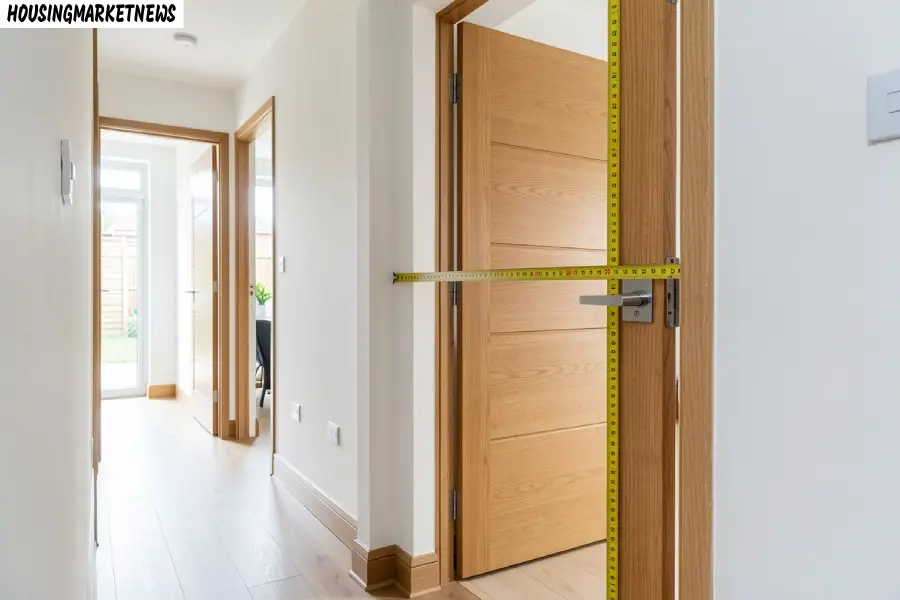
Walk into any DIY store and you’ll find rows of doors stacked in neat bundles with sizes printed on the packaging, 1981 x 762mm, 2040 x 826mm, 44mm thick. Simple, right? Until you get home and realise the door you bought doesn’t fit. Maybe it scrapes the floor. Maybe it won’t close. Maybe the handle slams into the wall, or worse, into someone’s elbow.
The truth is, door size matters more than most people think, not just for whether the thing fits in the hole, but for how your home functions day to day. It affects comfort, noise, draughts, accessibility, resale value, renovation cost and even how secure your home is.
This guide isn’t about turning you into a joiner, it’s about helping you understand what matters before you buy, replace or widen a doorway.
The 60-Second Takeaway: What to Check Before Buying Any Door
Before we get into the details, here’s a fast checklist to help you avoid common pitfalls:
- Measure the opening carefully. Not just the existing door leaf.
- Understand what’s staying, are you replacing the leaf, the frame, or both?
- Check the clear opening width, not just the door leaf size.
- Look at the traffic, how often the door is used, who uses it, what needs to fit through it.
- Future-proof if you’re renovating: prams, wheelchairs, big furniture.
- Know your home’s quirks, older homes rarely match standard sizes.
Door Fit Score (out of 5):
- 1pt: You’ve measured width/height in 3 places.
- 1pt: You know if it’s a leaf or full doorset.
- 1pt: You’ve looked at hinge clearance.
- 1pt: You’ve checked the floor level/threshold.
- 1pt: You’ve thought about future access needs.
Leaf vs Frame vs Clear Opening: Why Sizing Trips People Up
Let’s demystify the terminology that causes half the mistakes.
The door leaf is just the slab, the actual panel that swings open and shut. The door frame includes the surrounding structure, stops, linings, and thresholds. The structural opening is the bare masonry or studwork space.
Then there’s clear opening width, the real space you walk through. This is often smaller than the door leaf width once you account for hinges, stops, and how far the door opens. Handles that stick out? They eat into it too.
Two doors with the same leaf size can feel totally different in use if one opens wider, or has slimmer stops.
UK Standard Sizes Are a Guide, But Your House Might Not Care
Most UK internal doors follow a familiar pattern: 1981mm high by 762mm wide (sometimes called a 2’6″ door in imperial).
But common isn’t guaranteed. Older homes, lofts, cottages, and DIY extensions often feature non-standard sizes. In Scotland and new builds, doors may be slightly taller, 2040mm is common, and widths vary more.
External doors tend to be wider (826mm or more) and thicker (usually 44mm).
If you want the full tables of typical UK sizes, Lathams’ guide to UK standard door sizes lays it out clearly.
Accessibility and Regulations: When Size Isn’t Optional
If you’re renovating or building new, certain rules can apply, especially around accessibility.
Approved Document M of the Building Regulations deals with access to and use of buildings. While it doesn’t apply to every domestic alteration, if you’re creating new entrances or substantially altering layout, it may come into play.
In practice, this means doors should offer a clear opening width of at least 775mm in many contexts. That’s not the leaf size, that’s the usable space between stops and furniture, when the door is open.
Planning ahead matters. If you’re widening an opening anyway, making it wider now saves cost and disruption later, especially if your household might need wheelchair or pram access in future.
Comfort: Draughts, Noise, Scrapes and Slams
The wrong door size, or a door fitted into a skewed frame, can cause subtle but annoying problems over time.
- It might scrape on carpet, or leave a visible gap above new flooring.
- You might hear every sound from the next room due to acoustic leaks.
- Doors that are slightly out of square tend to stick in summer or swing open when they shouldn’t.
Silent problems checklist:
- Can you see daylight around the edges?
- Does the latch always align?
- Does the door slam from air movement?
- Is there resistance when opening or closing?
These aren’t just quality issues, they’re often symptoms of poor sizing, bad fitting, or not adapting to changes in the surrounding structure.
Security: Bigger Isn’t Always Better
You might assume a thicker or wider door is automatically stronger. Not quite.
Larger, heavier doors need more hinge support. They also put more strain on the frame and fixings, especially if installed into weak masonry or timber.
Double doors, often used for wide rear openings or garden access, can introduce vulnerabilities if the centre meeting stile isn’t reinforced. The “passive” door (the one that usually stays shut) can be a weak point unless it has proper keeps and shoot bolts.
Think of it this way: a stronger lock is pointless if the frame flexes when someone kicks it.
Security tip: fix the frame and hinge side before spending on locks. A secure door is a system.
Cost and Hassle: Standard vs Non-Standard
Standard-size doors are cheaper and easier to replace. Once you stray outside those dimensions, things change.
In older homes, you might encounter:
- Shorter or narrower doors (sometimes due to settled floors or ceiling lines).
- Thicker walls or deeper reveals.
- Doors that were cut to fit over uneven floors.
This often means:
- Custom door leafs.
- Made-to-measure frames.
- Extra labour for plasterwork, trim, decoration.
- Unexpected changes to light switches, skirting, radiators, flooring.
Rough budget framework:
- Replacing door leaf only = relatively simple, low cost.
- Replacing doorset = moderate cost, more involved.
- Altering structural opening = high disruption, often requires building control sign-off.
How to Measure Properly (Without Guesswork)
If you’re replacing just the door leaf:
- Measure height and width in three places (top/mid/bottom; left/centre/right).
- Use the smallest number as your base.
- Don’t forget thickness, older doors may be 35mm, newer ones 44mm.
If you’re replacing the whole doorset:
- Measure from reveal to reveal (the inside edge of the structural opening).
- Note any thresholds or cills that affect install.
- Consider how the new frame will fit, especially if walls are out of square.
3-measure rule: always check height and width in multiple spots. If the opening isn’t perfectly square (most aren’t), your door has to work with reality, not theory.
Final Thought
Door size is one of those details that quietly shapes your experience of a home. It’s not just a number, it’s how you move, how air flows, how sound carries, how safe you feel, and how hard it’ll be to redo things in five years.
Measure properly. Think ahead. And if something feels “off,” it might not be the door, it might be the size.

Comments are closed.