
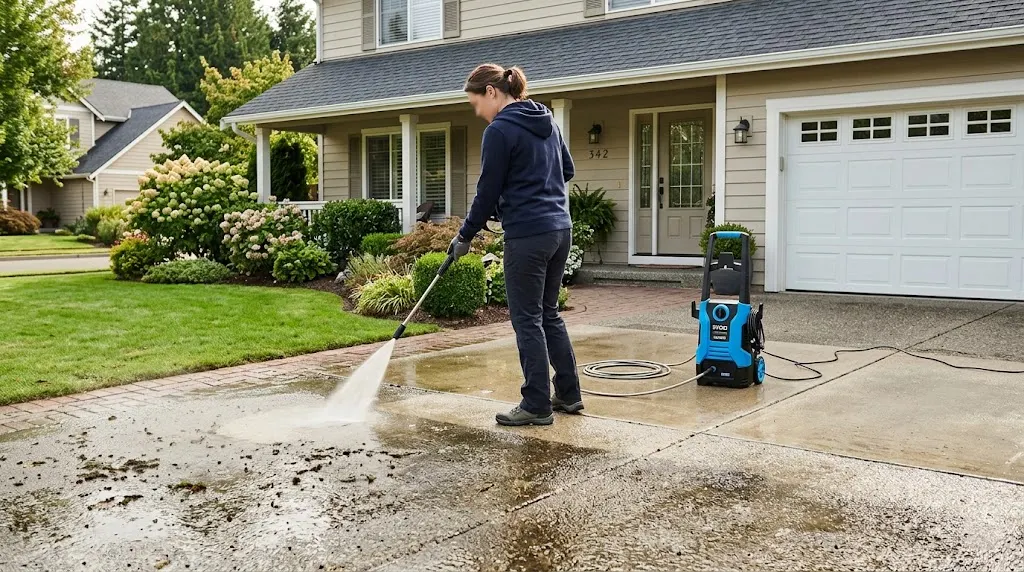
The best pressure cleaner for home use delivers between 1,500 and 3,000 PSI with a flow rate of 1.5 to 2.5 GPM. Electric models work well for most everyday tasks like driveways, patios, and car washing. Top picks include the Greenworks GPW3000, Ryobi RY142022, and Westinghouse WPX3000e.
You walk outside one morning, look at your driveway, and think — how did it get that dirty? Months of grime, oil stains, and weather have taken over. A garden hose just isn’t going to cut it. That’s exactly where a good pressure cleaner steps in.
Choosing the right one for home use doesn’t have to be complicated. This guide walks you through everything — the top models, the numbers that actually matter, and what to avoid when buying.
What Is a Pressure Cleaner and Why Do You Need One?

A pressure cleaner — also called a pressure washer or power washer — uses a motor or engine to push water through a narrow nozzle at high speed. The result is a tool that can work cleaning magic on concrete, decking, walkways, patios, steps, and more, erasing months or even years of stains with a brief blast.
The practical value is real. Instead of scrubbing your deck by hand or paying someone to clean your driveway, you can handle it yourself in an afternoon. By enabling you to completely refresh your wood deck instead of replacing it, pressure cleaners can also help you save money — and that can add up to thousands of dollars, considering the current state of inflation and high lumber prices.
For most homeowners, a pressure cleaner pays for itself quickly. They can even pay for themselves by saving you time and money spent at the car wash. Whether you want to clean your fence, degrease your garage floor, or prep your patio for summer, the right machine makes it fast and satisfying.
Electric vs Gas vs Battery — Which One Is Right for Your Home?
This is the first question you need to answer before buying anything. Each type has its strengths, and the wrong choice will leave you frustrated.
Electric pressure washers plug into an outlet, start instantly and easily. You don’t need to fuss with gas or oil, and there’s no engine maintenance. They’re often much quieter than gas options too. Because they tend to be less powerful than gas models, they’re best for lighter jobs, such as monthly walkway wash-downs.
Gas pressure washers are more powerful than electric and battery-operated machines. That makes them best suited for heavy-duty jobs, like cleaning a long-neglected deck or patio. The trade-off is that they’re heavier, louder, and require occasional maintenance. For most homeowners who clean a couple of times per year, this is more machine than you actually need.
Battery-powered pressure washers are hard to beat for convenience. They start instantly and don’t require a power cord. But these models can be significantly more expensive than gas and electric pressure washers. The batteries might not provide full power throughout a larger job, so you might need to recharge or replace one partway through.
For the average homeowner, a corded electric model is the smart pick. It’s affordable, easy to start, and powerful enough to handle everything from car washing to driveway scrubbing.
PSI and GPM — The Two Numbers That Actually Matter
Walk into any hardware store and you’ll see numbers like 2000 PSI and 1.6 GPM plastered on every box. Most people stare at them and have no idea what they mean. Here’s a simple breakdown.
The pressure produced by a power washer is measured in PSI (pounds per square inch), and requirements can vary based on the surface being cleaned. For example, significantly less pressure is required to clean dirt and salt from a vehicle than is needed to remove oil stains from a garage floor.
GPM measures the volume of water the pressure washer dispenses per minute. A higher water volume results in faster cleaning — more water flowing through the nozzle lifts and carries away dirt more effectively.
A good all-purpose pressure washer for home use should have between 2,000 and 3,000 PSI and a flow rate of 1 to 4 gallons per minute. That range covers everything from washing your car at the low end to blasting grimy concrete at the high end.
Higher isn’t always better. Too much PSI on delicate surfaces like wood, paint, or automotive finishes can cause real damage. So don’t just chase the biggest number — match the machine to the job.
You can also calculate a machine’s total cleaning power by multiplying PSI by GPM. This gives you a metric called Cleaning Units (CU). Even if a unit has lower PSI, it might clean better if the GPM is higher. It’s a useful way to compare two machines side by side.
Best Pressure Cleaners for Home Use in 2026
There are a lot of options on the market, but a handful of models consistently stand out for home use.
The Greenworks GPW3000 is the top pick from multiple expert reviews. It delivers 3,000 PSI, sprays up to two gallons of water per minute, comes with five nozzles, and features an onboard detergent tank. It handles tough jobs without making you drag around a gas machine.
The Ryobi RY142022 is a strong choice if you want solid performance on a tighter budget. With 1.2 GPM at 2,000 PSI, it has the cleaning power needed for most household chores. A PWMA certification backs that performance, and Ryobi doesn’t play games with inflated PSI ratings like some brands do. It’s reliable, affordable, and easy to find.
For those who want more muscle, the Westinghouse WPX3000e offers 3,000 max PSI and 1.76 max GPM, with an induction motor, an onboard soap tank, a spray gun, a wand, and a five nozzle set. It’s a versatile machine that works well on cars, fences, driveways, and patios.
If you want a lightweight option that punches above its size, the LWQ S5 is worth a look. At only 16.8 pounds, it’s among the lightest options on the market while still producing solid cleaning power. The designers included an attachable foam cannon that effectively coats a car with suds for easy washing.
What to Look for Before You Buy
A few features separate a frustrating purchase from a great one. Pay attention to these before clicking “add to cart.”
The hose length matters more than most people realize. A 35-foot hose reaches farther than the 25-foot ones that come with most electric models, which means you can cover more ground without stopping to reposition. A longer hose saves time and reduces trips back and forth.
Nozzle variety is also important. Most machines come with multiple color-coded nozzles for different spray angles — from a tight 0-degree stream for stubborn stains to a wide 40-degree fan for rinsing. A 5-in-1 adjustable nozzle is even more convenient because you don’t need to swap tips.
Think about storage and portability too. Some electric models perform well on concrete but struggle on uneven terrain. A machine with large wheels, an ergonomic design, and a heavy-duty frame handles outdoor conditions much better. If your yard has grass or gravel paths between cleaning areas, this matters.
Stick with recognized brands. Avoid cheap brands from manufacturers without a proven track record. Spending around $200 gets you a solid balance of price and performance from trusted names. Saving $30 on a no-name unit often means replacing it after one season.
Tips for Safe and Effective Pressure Cleaning
Even the best machine can cause damage if you use it wrong. A few simple habits will protect both your property and yourself.
Always start with a wider nozzle angle and lower pressure, then increase as needed. Starting at the lowest possible PSI setting and carefully increasing pressure helps you avoid damaging the surface or risking injury. Wood decks and painted surfaces are especially easy to gouge if you come in too hot.
If your machine comes with a zero-degree nozzle, consider throwing it away. Those nozzles blast a stream of water with such force that it can pierce the skin and even cut through protective gear, including boots. Zero-degree tips are simply too dangerous for home use.
Keep the nozzle moving at all times. Holding it in one spot too long can etch concrete or strip paint. Work in smooth, overlapping passes — the same way you’d paint a fence.
Use detergent for tough stains. Most machines have an onboard soap tank or an attachment for a foam cannon. Let the detergent sit for a minute or two before rinsing. This is especially effective on oil-stained driveways and mildewed wood.
The Right Machine Makes All the Difference
Picking the best pressure cleaner for home use comes down to knowing what you’ll clean and how often. For most homeowners, a corded electric model in the 1,500 to 3,000 PSI range hits the sweet spot — enough power for real results without the noise, weight, or upkeep of a gas engine. The Greenworks GPW3000, Ryobi RY142022, and Westinghouse WPX3000e are all worth your money. Buy once, buy well, and your driveway will thank you.


Comments are closed.