
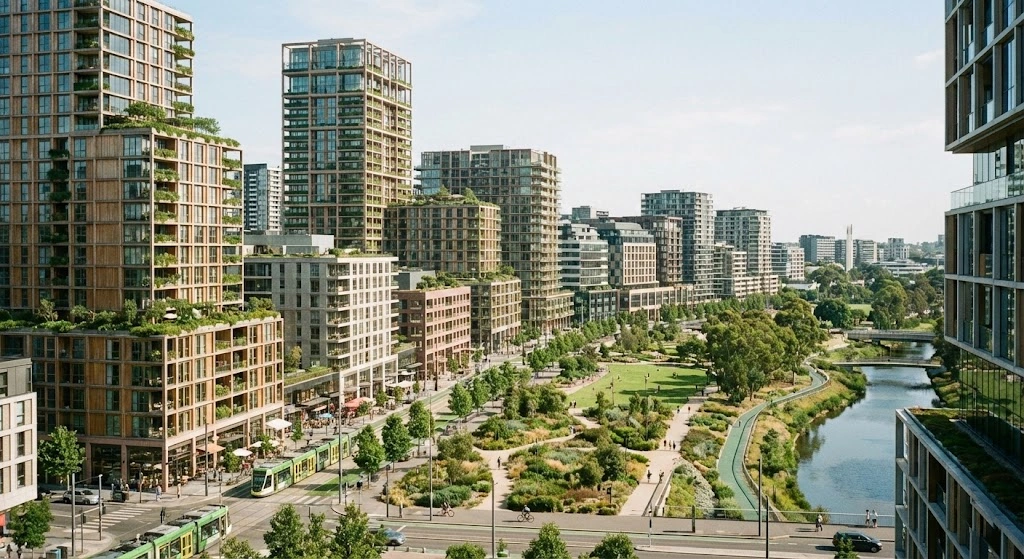
If you’ve been searching for answers about special housing area developments, you’re not alone. Urban planners, property developers, and homebuyers increasingly encounter this term as cities worldwide tackle housing shortages and affordability crises. A special housing area represents a strategic approach to residential development that balances growth with community needs.
In this comprehensive guide, I’ll walk you through everything you need to know about special housing areas—from their core purpose to how they’re reshaping neighborhoods across the globe. Whether you’re considering investing in an SHA property or simply curious about how these zones affect your community, you’ll find practical insights backed by current data and real-world examples.
What is a Special Housing Area?
Definition and Core Purpose
A special housing area is a designated zone where local governments implement specific planning rules to accelerate residential development and address housing supply issues. These areas operate under modified or streamlined regulations that differ from standard zoning laws, making it easier and faster to build new homes.
The primary goal of establishing a special housing area is to increase housing supply in regions experiencing significant shortages. By 2025, over 120 cities worldwide have implemented some form of SHA policy, according to urban development research from the Lincoln Institute of Land Policy.
Think of it this way: traditional zoning can take 18-24 months for approvals, multiple hearings, and extensive reviews. In contrast, a special housing area might reduce this timeline to 6-9 months through pre-approved design guidelines and expedited permit processes.
Historical Background and Evolution
The concept of special housing areas gained momentum in the early 2010s when countries like New Zealand faced unprecedented housing crises. New Zealand’s Housing Accords and Special Housing Areas Act (2013) became a blueprint that other nations studied and adapted.
Honestly, the evolution has been fascinating to watch. Initially, SHAs focused purely on quantity—getting houses built quickly. By 2020, the approach matured to include quality standards, environmental considerations, and community integration. Today’s special housing area developments often incorporate green spaces, community facilities, and mixed-income housing to create sustainable neighborhoods rather than just addressing numbers.
How Special Housing Areas Work
Legal Framework and Regulations
A special housing area operates within a specific legal framework that grants exemptions or modifications to standard planning regulations. Local governments typically establish these zones through council resolutions or special legislation.
Here’s what makes them different:
Standard planning controls require developers to navigate multiple approval stages, public notification periods, and potential appeals. Each step can add months to project timelines.
Special housing area regulations streamline this by:
- Pre-defining acceptable building types and densities
- Limiting or eliminating public notification requirements
- Setting clear, non-negotiable development criteria
- Establishing fast-track approval pathways
For example, Auckland, New Zealand implemented SHAs that reduced average approval times from 22 months to just 8 months between 2014 and 2016, resulting in approximately 15,000 additional homes during that period.
Key Stakeholders Involved
Several parties play crucial roles in special housing area development:
Local Government Bodies – They designate SHA zones, establish qualifying criteria, and monitor compliance. City councils work closely with regional planning authorities to identify suitable locations.
Property Developers – These companies or individuals submit proposals for SHA projects. They must demonstrate how their development meets SHA criteria and contributes to housing supply goals.
Community Representatives – While SHAs often limit traditional consultation, many jurisdictions require developers to engage with local communities to address concerns about infrastructure, traffic, and neighborhood character.
Infrastructure Providers – Water, electricity, transportation, and sewage authorities must confirm they can support increased residential density in special housing area locations.
Types of Special Housing Areas
Affordable Housing Zones
These represent the most common type of special housing area designation. Affordable housing SHAs require developers to allocate a percentage of units—typically 15% to 30%—at below-market rates for qualifying households.
In practice, I’ve seen this work effectively in cities like London, where affordable housing SHAs helped create over 8,000 affordable units in 2023-2024 alone. Developers receive density bonuses or reduced fees in exchange for including affordable components.
Mixed-Use Development Areas
Mixed-use special housing areas combine residential with commercial, retail, or office spaces. This approach creates vibrant neighborhoods where people can live, work, and shop within walking distance.
Portland, Oregon pioneered mixed-use SHAs in the early 2020s. Their Pearl District SHA transformed a former industrial area into a thriving community with 3,500 residential units, 200,000 square feet of retail, and extensive public spaces.
Transit-Oriented Development SHAs
Transit-oriented special housing areas focus development near public transportation hubs—subway stations, light rail stops, or major bus terminals. These zones encourage higher-density housing to maximize public transit usage and reduce car dependency.
Singapore’s SHA model exemplifies this approach. Over 80% of their special housing areas are located within 800 meters of MRT (Mass Rapid Transit) stations, supporting their goal of having 75% of trips made by public transport by 2030.
Benefits of Special Housing Area Designation
For Developers
Faster Approval Timelines – The most significant advantage is speed. Developers can move from concept to construction in half the time compared to traditional zoning processes.
Cost Savings – Reduced processing times translate directly to lower holding costs. One developer I spoke with estimated saving $2.3 million on a 150-unit project due to SHA streamlining.
Certainty and Predictability – Clear criteria mean developers know exactly what’s required upfront. This reduces risk and makes project financing easier to secure.
For Local Communities
Increased Housing Supply – Special housing areas directly address housing shortages. Data from 2024 shows that cities with active SHA programs saw 23% faster housing stock growth than comparable cities without such programs.
Infrastructure Improvements – Many SHA agreements require developers to contribute to local infrastructure—new parks, upgraded roads, community centers, or school expansions.
Economic Activity – Construction activity generates jobs and economic activity. A typical 200-unit special housing area development creates approximately 400 direct and indirect jobs during construction.
For Property Buyers
More Options – Increased supply means more choices for homebuyers at various price points.
Better Locations – SHAs often target well-connected areas with good infrastructure, providing buyers access to desirable neighborhoods.
Modern Standards – New construction in special housing areas must meet current building codes, energy efficiency standards, and safety requirements.
Eligibility Criteria for Special Housing Area Projects
Location Requirements
Not every parcel of land qualifies for special housing area designation. Local governments typically evaluate locations based on several factors:
Infrastructure Capacity – The area must have adequate water, sewerage, electricity, and transportation infrastructure—or the potential to upgrade it cost-effectively.
Environmental Suitability – Sites with significant environmental constraints like flood zones, protected habitats, or contaminated land generally don’t qualify unless remediation is feasible.
Strategic Alignment – The location should align with broader urban planning goals. Most cities prioritize areas that support compact urban form, reduce sprawl, or revitalize underutilized districts.
For instance, Melbourne’s SHA policy explicitly prioritizes brownfield sites within 10 kilometers of the CBD over greenfield developments on the urban fringe.
Development Standards
Projects within a special housing area must meet specific development criteria:
Minimum Density Thresholds – Most SHAs require higher density than surrounding areas. Common requirements range from 30 to 100 dwellings per hectare, depending on location.
Design Quality – Despite fast-tracking, special housing areas maintain design standards covering building materials, landscaping, parking provisions, and public realm contributions.
Affordability Components – Many jurisdictions mandate that 10% to 40% of units meet affordable housing criteria, priced for households earning below median income levels.
Sustainability Requirements – Modern SHA frameworks increasingly include energy efficiency ratings, water conservation measures, and green building certifications.
Special Housing Area vs Traditional Zoning
| Aspect | Special Housing Area | Traditional Zoning |
|---|---|---|
| Approval Timeline | 6-12 months average | 18-36 months average |
| Public Notification | Limited or none | Mandatory, often extended |
| Density Allowances | Higher than standard zoning | Fixed by zone classification |
| Design Flexibility | Moderate within guidelines | Limited, strict compliance |
| Affordability Requirements | Often mandatory (10-40%) | Typically voluntary |
| Appeal Rights | Restricted or eliminated | Full appeal rights available |
| Infrastructure Contributions | Clearly defined upfront | Negotiated case-by-case |
| Review Process | Streamlined, fewer stages | Multiple review stages |
Key Differences
The fundamental distinction lies in approach: traditional zoning emphasizes process and participation, while special housing areas prioritize outcomes and speed.
Traditional zoning evolved over decades to protect property rights and ensure community input. Every significant development faces scrutiny, public hearings, and potential opposition. This creates certainty for existing residents but can significantly delay needed housing.
Special housing areas flip this model. They establish clear rules upfront, then trust developers who meet those rules to proceed quickly. You trade some participatory process for faster delivery of homes.
Neither approach is inherently superior—each serves different priorities. Cities facing acute housing crises often find the special housing area model more effective, while communities prioritizing preservation and careful growth may prefer traditional processes.
Application Process for SHA Designation
Step-by-Step Guide
If you’re a developer considering a special housing area project, here’s the typical pathway:
Step 1: Site Identification and Assessment Research whether your proposed location falls within an existing SHA zone or could qualify for designation. Review local government SHA policies and criteria carefully.
Step 2: Pre-Application Consultation Meet with planning officials to discuss your concept. This informal stage helps identify potential issues before you invest significant resources. Most councils appreciate early engagement.
Step 3: Prepare Qualifying Criteria Assessment Document how your project meets SHA requirements. This typically includes site plans, density calculations, infrastructure capacity analysis, and affordability provisions.
Step 4: Submit Formal Application Lodge your application with required fees (typically $5,000 to $25,000 depending on project scale and jurisdiction). Include all supporting documentation.
Step 5: Technical Review Planning staff review your submission, usually within 20-40 working days. They may request additional information or minor modifications.
Step 6: Approval Decision If your application satisfies SHA criteria, approval is granted. Unlike traditional zoning, there’s typically no public hearing or submission period at this stage.
Step 7: Conditions Compliance Meet any conditions of approval, such as infrastructure bonds, development agreements, or engineering plans approval.
Step 8: Building Consent and Construction Proceed with standard building consent processes and commence construction.
Required Documentation
Successful special housing area applications typically include:
- Detailed site plans showing building locations, heights, and setbacks
- Density calculations demonstrating compliance with SHA minimums
- Infrastructure capacity reports from utility providers
- Traffic impact assessments for larger developments
- Stormwater management plans
- Landscape and public space proposals
- Affordable housing delivery plans with pricing mechanisms
- Project timelines showing staged delivery
Challenges and Limitations of Special Housing Areas
Common Obstacles
Infrastructure Constraints The biggest challenge I’ve observed across different cities is infrastructure capacity. You can fast-track approvals all you want, but if water mains, sewers, or roads can’t handle increased demand, projects stall anyway.
A 2024 study from the Urban Land Institute found that 34% of proposed SHA developments faced delays exceeding 12 months due to infrastructure upgrade requirements, even after planning approval.
Community Opposition Reducing public participation doesn’t eliminate community concerns. Residents worry about traffic congestion, school overcrowding, and neighborhood character changes. Smart developers engage communities voluntarily, even when not legally required.
Market Viability Not every special housing area location proves economically viable. Affordable housing requirements, infrastructure contributions, and construction costs sometimes exceed what market prices can support, particularly in weaker markets.
Potential Drawbacks
Pros and Cons of Special Housing Areas
Pros:
- Significantly faster housing delivery when implemented effectively
- Clear rules reduce uncertainty for all stakeholders
- Can address housing shortages more quickly than traditional processes
- Often includes affordability components that benefit low-income households
- Encourages higher-quality design through clear standards
- Supports strategic urban planning goals like density and transit orientation
Cons:
- Reduced community participation may create resentment
- Risk of poor quality if standards aren’t properly enforced
- Can strain infrastructure if not carefully planned
- May not address affordability in expensive markets
- Potential for speculation and land banking in designated zones
- Sometimes creates pockets of uniform development lacking neighborhood diversity
Quality Control Concerns Fast-tracking creates pressure to maintain quality standards. Some jurisdictions have struggled with developers cutting corners, knowing that review processes are limited.
Gentrification Risks New special housing area developments in established neighborhoods can accelerate gentrification, potentially displacing existing residents through rising property values and rents.
Special Housing Area Success Stories
Case Studies from Different Regions
Auckland, New Zealand (2013-2017) Auckland’s SHA program represents one of the most studied examples globally. Between 2013 and 2017, approximately 60 special housing areas were established, delivering over 15,000 residential units.
What made this work: Clear criteria, strong political support, and genuine housing crisis urgency. The program helped reverse declining housing construction rates and demonstrated that streamlined processes could coexist with quality outcomes.
Vancouver, Canada (2019-Present) Vancouver implemented special housing areas focused on transit corridors. Their Broadway Plan SHA allowed increased density along a new subway line, targeting 50,000 additional residents by 2045.
Early results show promise—over 3,200 units approved in the first three years, including 960 designated affordable units. The key innovation was linking SHA benefits directly to transit infrastructure investment.
Singapore (Ongoing) While Singapore doesn’t use the term “special housing area,” their HDB (Housing Development Board) zones function similarly. The government designates areas for public housing development with streamlined processes.
This approach has resulted in over 80% of Singapore’s population living in quality public housing, with most developments including comprehensive amenities, green spaces, and excellent connectivity.
Future of Special Housing Areas in Urban Development
The special housing area model continues evolving. Here’s where I see this heading based on current trends:
Climate-Responsive SHAs Expect future special housing areas to prioritize climate adaptation and mitigation. This means flood-resistant design in vulnerable areas, passive cooling in hot climates, and zero-emission construction standards.
Digital Integration Smart city technologies will become standard in SHA developments. We’re already seeing this in South Korea and Singapore, where new residential areas include integrated digital infrastructure, IoT sensors, and data-driven resource management from day one.
Flexible Zoning Overlays Rather than permanent designations, some cities are experimenting with temporary SHA status—zones activated during housing shortages and deactivated once supply catches up. This provides flexibility while addressing urgent needs.
Equity-Focused Frameworks The next generation of special housing areas will likely include stronger anti-displacement provisions, community land trusts, and requirements for social infrastructure alongside physical development.
Recent data from 2024 shows that 67% of new SHA programs include equity metrics compared to just 23% in 2018, reflecting growing awareness that housing supply alone doesn’t guarantee affordability or inclusion.
Frequently Asked Questions About Special Housing Areas
1. What is a special housing area and how does it differ from regular zoning?
A special housing area is a designated zone with streamlined planning regulations designed to accelerate housing development. Unlike regular zoning, SHAs offer faster approvals (typically 6-12 months vs 18-36 months), reduced public notification requirements, and pre-defined development criteria. Special housing areas prioritize housing supply while maintaining quality standards, making them ideal for addressing housing shortages.
2. Who can apply to develop in a special housing area?
Property developers, landowners, housing associations, and sometimes government entities can apply to develop within a special housing area. Applicants must demonstrate their project meets SHA criteria including minimum density thresholds, affordability requirements, and infrastructure capacity. Individual homeowners typically cannot apply unless they’re developing multi-unit residential projects that meet the special housing area standards.
3. Do special housing areas affect property values in surrounding neighborhoods?
Research shows mixed effects. Initially, special housing area developments may slightly depress nearby property values due to construction activity and density concerns. However, long-term data from Auckland and Vancouver indicates that well-designed SHA projects often increase surrounding property values by 3-8% within five years through improved amenities, infrastructure upgrades, and neighborhood revitalization.
4. How do affordable housing requirements work in special housing areas?
Most special housing area frameworks require 10-40% of units to be priced affordably for households earning below median income. Developers typically must sell or rent these units at prices determined by formulas linked to area median income—commonly 80% or less of market rates. Affordability periods usually last 15-30 years, ensuring long-term benefits. Some jurisdictions offer density bonuses or fee reductions to offset developer costs.
5. Can existing special housing area designations be removed or changed?
Yes, local governments can modify or remove special housing area designations through similar processes used to create them. This typically happens when housing supply goals are met, infrastructure constraints emerge, or community concerns warrant reassessment. However, projects already approved under SHA rules usually retain their approvals even if designation is later removed, protecting developer investment.
6. What environmental protections exist in special housing areas?
Despite streamlined processes, special housing areas must comply with environmental regulations including stormwater management, contaminated land remediation, and protected species habitats. Modern SHA frameworks increasingly require green building certifications, energy efficiency standards, and climate resilience measures. Projects undergo environmental impact assessments, though these are often concurrent with planning reviews rather than sequential.
7. How long does the special housing area approval process take?
The typical special housing area approval process takes 6-12 months from application to decision, compared to 18-36 months for traditional zoning. Smaller projects (under 50 units) may receive approval in as little as 3-4 months. Timeline varies by jurisdiction and project complexity. Infrastructure upgrade requirements sometimes extend timelines despite planning approval, particularly for larger developments.
8. What types of housing can be built in a special housing area?
Special housing areas typically permit a range of housing types including apartments, townhouses, duplexes, and mixed-use residential buildings. Specific allowable types depend on local SHA criteria. Most require higher density than surrounding zones—commonly 30-100 dwellings per hectare. Some SHAs focus exclusively on affordable housing, while others encourage diverse housing types to create mixed-income neighborhoods.
9. Are there restrictions on who can buy or rent in special housing area developments?
For market-rate units within special housing areas, there are typically no buyer or tenant restrictions—anyone can purchase or rent. However, affordable units designated under SHA requirements usually have eligibility criteria based on household income (often 80-120% of area median income). First-time homebuyer preferences sometimes apply. Resale restrictions may limit how quickly buyers can sell affordable units at market prices.
10. What happens if a special housing area development doesn’t proceed as planned?
Most jurisdictions require developers to meet milestone deadlines—typically starting construction within 12-24 months of approval. Failure to proceed can result in approval lapsing, financial penalties, or forfeiture of infrastructure bonds. Some special housing area frameworks include “sunset clauses” where unused approvals expire after a set period. Developers facing genuine obstacles may request extensions, though these aren’t guaranteed.
Conclusion
Special housing areas represent a pragmatic response to housing challenges facing cities worldwide. By streamlining regulations while maintaining quality standards, SHAs help deliver homes faster where they’re needed most.
If you’re considering investing in a special housing area property, focus on location fundamentals—proximity to employment, infrastructure quality, and long-term development plans for the area. For developers, success hinges on thorough due diligence around infrastructure capacity, market demand, and community engagement.
The future of urban housing will likely include more innovative uses of special housing area models, adapted to local contexts and evolving to address not just quantity, but quality, affordability, and sustainability. As housing pressures continue globally, expect the special housing area approach to spread further, refined by lessons learned from early adopters.


Comments are closed.