
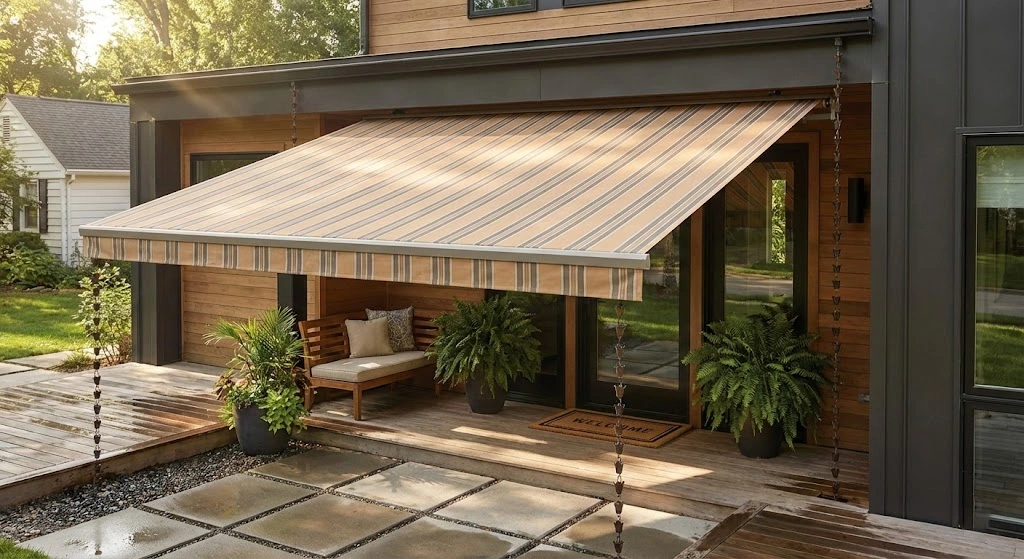
Front porch awnings provide weather protection, energy savings, and curb appeal for your home. Available in fabric, metal, or polycarbonate materials, these structures cost between $1,455 and $4,633 installed and can reduce cooling costs by up to 20°F while protecting your entryway from rain, snow, and UV rays.
Your front porch is the first thing visitors see when they approach your home. It sets the tone for everything inside. But here’s the thing: an unprotected porch faces constant assault from rain, snow, and harsh sunlight. That’s where a front porch awning comes in.
Think of it as a shield for your entryway. A front porch awning does more than just look good. It keeps you dry while you fumble with your keys in the rain. It blocks UV rays that fade your door and furniture. And it can actually save you money on energy bills. Not bad for a simple addition to your home’s exterior.
Let me walk you through everything you need to know about front porch awnings. We’ll cover the types available, what they cost, how they benefit your home, and what you should think about before buying one.
Understanding Front Porch Awnings

A front porch awning is a covering installed above your porch or entryway. It extends from your home’s exterior wall to create a sheltered area. The structure consists of a frame and covering material that work together to protect you from weather elements.
These awnings differ from full covered porches in important ways. They require less construction time, cost significantly less, and can be added to existing structures without major renovation. A covered porch might take weeks or months to build. An awning? You can have one installed in a day or two.
The beauty of awnings lies in their versatility. You can find them in sizes ranging from small door covers to large structures that span your entire front porch. Some homeowners choose awnings that barely extend beyond the doorframe. Others want coverage that creates a genuine outdoor room.
Types of Front Porch Awnings You Can Choose
Walk into any home improvement store and you’ll find several awning types. Each serves different needs and preferences.
Retractable awnings give you control over your coverage. When the sun blazes down, you extend them for shade. When you want natural light or the weather turns stormy, you retract them. Manual versions use a crank mechanism that you operate by hand. Motorized models let you press a button or use a remote control. Some advanced motorized awnings even include sensors that detect wind, sun, or rain and adjust automatically.
Fixed awnings stay in place year-round. They’re permanently attached to your home’s exterior and provide constant protection. You’ll commonly see these over windows and doors. They work particularly well in areas with frequent sun or rain because they offer continuous defense against the elements. The best part? No moving parts means less maintenance over time.
Dome awnings add character to traditional or cottage-style homes. Their curved shape naturally sheds rainwater and creates an elegant entrance. The rounded front softens the look of your entryway while providing solid weather protection.
Canvas awnings bring a coastal or retro vibe to your front porch. They’re lightweight and come in countless colors and patterns. Black and white stripes create a classic look. Solid colors can match or complement your home’s existing palette. These awnings are among the easiest to install because they weigh less than metal alternatives.
Materials That Make the Difference
The material you choose affects how long your awning lasts, how much maintenance it needs, and how it looks on your home.
Fabric awnings typically use polyester, canvas, or acrylic materials. Polyester stands out as the most popular choice because it resists mildew, holds up well in various weather conditions, and costs less than other options. When coated with PVC, polyester becomes waterproof and UV-resistant. Canvas offers aesthetic appeal and comes in beautiful textures, but it’s more prone to tears and requires more maintenance. Acrylic fabrics resist fading better than other materials and work well in sunny climates.
Metal awnings deliver serious durability. Aluminum leads the pack for metal awnings because it resists rust and corrosion while remaining lightweight. It costs between $9 and $25 per square foot. Steel provides more strength and can handle heavier snow loads, but it weighs more and costs more to install. Copper represents the premium choice, with prices ranging from $90 to $120 per square foot. It develops a beautiful patina over time and can last decades without maintenance.
Polycarbonate awnings offer a modern solution. This engineered material blocks UV rays effectively while allowing natural light through. It’s virtually indestructible and needs minimal upkeep. The material resists impact damage and works well in climates with variable weather. However, its industrial appearance might not suit traditional home styles, and it offers limited color options compared to fabric or metal.
Wood frames paired with canvas or other materials create rustic charm. Wood brings natural warmth to your porch but requires regular maintenance. You’ll need to seal or paint it periodically to prevent weather damage. Temperature fluctuations make wood expand and contract, which can lead to warping over time. An awning helps protect wooden porch elements from these severe weather changes.
The Real Benefits of Installing an Awning
Let me tell you about the practical advantages that make awnings worth considering.
Weather protection tops the list. Rain no longer soaks you while you search for your house keys. Snow doesn’t pile up on your welcome mat. Your front door stays protected from water damage and sun exposure. The awning acts as your first line of defense against harsh elements.
Energy savings might surprise you. Awnings reduce solar heat gain by up to 20°F. That means your air conditioner doesn’t work as hard during summer months. Less AC use translates to lower energy bills. The savings accumulate month after month, year after year. Over time, your awning can pay for itself through reduced cooling costs.
Curb appeal gets an instant boost. A well-chosen awning adds architectural interest to your home’s exterior. It creates visual depth and can make your entryway look more substantial. Real estate agents know that homes with attractive entryways often sell faster and for higher prices.
Furniture and flooring protection extends the life of your investment. UV rays fade your door finish, damage porch furniture, and deteriorate flooring materials. An awning blocks these harmful rays. Your porch items stay looking newer for longer.
Expanded outdoor living space changes how you use your home. The covered area becomes a comfortable spot to sit with morning coffee. You can welcome guests without worrying about rain. Even on hot days, the shade makes your porch usable. You’re essentially adding functional square footage to your home.
Cost Breakdown for Front Porch Awnings
Money matters when you’re planning a home improvement project. Let’s look at what you’ll actually spend.
Basic canvas awnings start around $300 to $700 before installation. These budget-friendly options work well for homeowners who want simple weather protection without breaking the bank. Manual retractable awnings cost between $500 and $1,500. They give you flexibility without the higher price tag of motorized systems.
Metal awnings range from $250 to $950 for the materials. Aluminum options fall in the middle of this range. Steel costs more due to its weight and durability. Custom metal work increases the price significantly.
Motorized retractable awnings represent a bigger investment. Expect to pay between $2,000 and $3,500 for these convenient systems. Advanced models with weather sensors can reach $5,000 or more. The technology adds convenience but comes at a premium.
Professional installation costs $100 to $400 for most projects. Simple installations take about an hour and often come with a flat fee. Complex installations involving multiple stories, difficult access, or electrical work for motorized systems cost more. Labor rates vary by location, with urban areas typically charging higher prices.
The national average for a complete awning project runs between $1,455 and $4,633. Most homeowners spend around $3,028 total. Your final cost depends on awning size, material choice, and whether you select manual or motorized operation.
Don’t forget about permits. Some municipalities require building permits for exterior modifications. Permit fees typically range from $25 to $100. Check with your local building department before starting your project.
Installation Considerations You Should Know
Installing an awning involves more than just hanging it up and calling it done.
Professional installation makes sense for most homeowners. Experts ensure your awning is properly secured, meets local building codes, and functions as intended. They have the right tools and experience to handle challenges like uneven walls, brick surfaces, or high installation points. Many manufacturers require professional installation to maintain warranty coverage.
DIY installation is possible for handy homeowners with the right skills. Pre-fabricated awnings often come with detailed instructions and pre-drilled holes. You’ll need basic tools like a drill, level, and ladder. However, mistakes during installation can lead to water leaks, structural problems, or safety hazards. Consider your skill level honestly before choosing the DIY route.
Building codes and regulations vary by location. The International Building Code outlines specific requirements for awnings in most states. Your local building department can tell you what’s allowed in your area. Some homeowner associations also have rules about exterior modifications. Check all regulations before purchasing your awning.
Structural considerations matter for safe installation. Your home’s exterior wall must be strong enough to support the awning’s weight, especially when loaded with rain or snow. Brick, concrete, and solid wood framing provide good support. Installation on older homes or those with questionable wall integrity might require additional reinforcement.
Maintenance That Keeps Your Awning Looking Great
Regular care extends your awning’s lifespan and keeps it looking fresh.
Fabric awnings need periodic cleaning. Use mild soap and water with a soft-bristled brush. Scrub gently to remove dirt, pollen, and debris. Avoid harsh chemicals that can break down the fabric or remove protective coatings. Most fabric awnings should be cleaned two to three times per year, depending on your climate and surrounding environment.
Inspect retractable mechanisms regularly. Check moving parts for signs of wear. Look at joints, brackets, springs, and retraction arms. Apply lubricant to moving parts as recommended by the manufacturer. This simple step prevents squeaking and ensures smooth operation.
Retract awnings during severe weather. Heavy snow, strong winds, and hailstorms can damage even durable awnings. If you have a retractable model, pull it in when storms approach. Fixed awnings need to be built strong enough to handle your area’s typical weather extremes.
Watch for signs of damage. Small tears in fabric can be repaired before they become bigger problems. Rust spots on metal should be addressed quickly. Loose mounting hardware needs immediate attention to prevent the awning from detaching from your home.
Replace fabric when necessary. Even high-quality fabrics eventually fade, tear, or develop mold. Fabric replacement costs up to $1,000 but costs far less than replacing the entire awning system. Plan for fabric replacement every 5 to 15 years, depending on material quality and weather exposure.
Choosing the Right Awning for Your Home
Match your awning to your home’s architectural style. Traditional homes look best with classic dome awnings or simple fixed designs. Modern homes pair well with minimalist metal awnings or sleek retractable systems. Cottage-style homes shine with gabled awnings featuring decorative woodwork. Mediterranean or Tuscan architecture works beautifully with striped canvas awnings.
Consider your climate carefully. Homes in sunny, dry regions benefit from fabric awnings that provide shade without constant weather exposure. Rainy climates need waterproof materials and good drainage design. Snowy areas require strong frames that can support snow loads. Coastal locations need corrosion-resistant materials like aluminum or treated fabrics.
Think about your usage patterns. If you want year-round coverage with minimal fuss, choose a fixed awning. If you prefer flexibility and want to control sun exposure throughout the day, a retractable model makes more sense. Motorized systems work best for people who want convenience and might struggle with manual cranks.
Size matters for proper coverage. Measure your porch or door area carefully. Your awning should extend far enough to actually protect you from rain when you’re standing at the door. It should also be wide enough to cover the entire entrance area. Too small and it’s ineffective. Too large and it overwhelms your home’s facade.
Making Your Investment Worthwhile
A front porch awning represents more than just an exterior addition. It’s an investment in your home’s comfort, energy efficiency, and appearance.
The return on investment ranges from 50% to 70% according to industry estimates. You’ll recoup a significant portion of your costs through energy savings and increased home value. But the real value goes beyond numbers. You gain a more comfortable entryway, better weather protection, and enhanced outdoor living space.
Choose quality materials and professional installation when your budget allows. The cheapest option might seem attractive initially, but poor quality means faster replacement and more maintenance. A well-made awning from reputable manufacturers lasts 15 to 20 years with proper care.
Get multiple estimates before committing. Prices vary significantly between contractors and suppliers. Three quotes give you a good sense of fair market pricing in your area. Make sure each estimate includes the same scope of work for accurate comparison.
Your front porch awning should make your life easier and your home more enjoyable. Whether you choose a simple fixed canvas awning or a high-tech motorized system, the right choice protects your investment and welcomes you home every single day.
The weather won’t stop battering your front porch. But with the right awning, you can face it with style and confidence.

Comments are closed.