
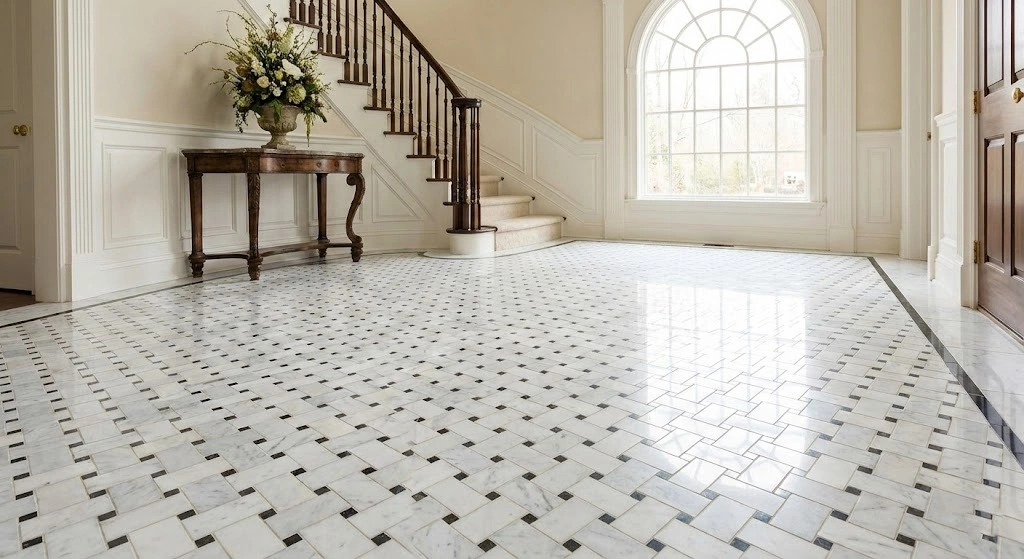
Chatham NJ basket weave marble features two main finishes: polished for high-gloss shine and reflection, or honed for a smooth matte surface. Both finishes can be professionally restored through diamond grinding, honing, and polishing processes to bring back your floor’s original beauty.
You walk into a Chatham home with a basket weave marble floor that catches your eye immediately. The pattern looks amazing, but the finish makes all the difference. That mirror-like shine or smooth matte surface transforms the entire space.
Basket weave marble in Chatham NJ homes has become a signature feature in entryways, kitchens, and bathrooms. The finish you choose affects not just how it looks, but how it performs in your daily life.
Understanding Basket Weave Marble Finishes
Marble finishes come in two primary types, and each brings something different to your home. The finish determines how light bounces off the surface, how it feels under your feet, and how much maintenance you’ll need.
A polished finish gives you that glossy, high-shine look you see in luxury hotels. Light reflects off the surface so clearly you can see tree branches from outside your window mirrored on your floor. This finish closes up the marble’s pores, making it less absorbent and more stain resistant.
Honed finishes offer a completely different vibe. The surface feels smooth and satiny but doesn’t reflect light the same way. You get a matte appearance that works perfectly in high-traffic areas where a polished surface might show wear faster. Many homeowners in Chatham prefer honed finishes for bathroom floors because they’re less slippery when wet.
The thickness matters too. Quality marble tiles for basket weave patterns measure about 10 millimeters thick. That’s 25% thicker than what some online retailers sell, which means your floor will last longer and resist cracking better.
The Polished Finish Experience
When restoration companies work on basket weave marble in Chatham, they often bring floors to a polished finish. This process creates a crystal-clear reflection that shows off the marble’s natural veining and color variations.
Getting a true polished finish takes real skill. Technicians use progressively finer diamond grinding pads, starting with coarser grits to level the surface and moving up to 3000 grit or higher. The final step involves polishing compounds that create a chemical reaction with the calcium carbonate in the marble.
You’ll notice the difference immediately. A properly polished marble floor in Chatham homes shows such clarity that you can see the outline of furniture and trees reflected in the stone. This isn’t something you get from shortcuts like crystallization alone or using basic polishing pads.
The process takes time. First comes grinding to flatten any uneven tiles (called lippage). Then diamond honing removes scratches and marks. Finally, powder polishing brings out that beautiful shine with clear reflection. Water beads up on a properly polished surface before being absorbed, showing how tightly the pores have closed.
Professional work makes all the difference. Companies serving Chatham use weighted floor machines with water to keep the process dust-free. They work systematically through grits—50, 100, 200, 400, 800, 1500, and 3000—depending on how deep the damage goes.

Why Homeowners Choose Honed Finishes
Not everyone wants that mirror shine. Honed finishes have gained popularity in Chatham for good reasons.
The matte appearance gives rooms a more relaxed, natural feel. You don’t get the dramatic reflections, but you do get a sophisticated look that never goes out of style. The surface feels silky smooth to the touch.
Safety plays a big role. A honed finish provides better traction, especially important for bathroom floors or entryways where water might splash. Parents with young kids often prefer honed marble for this exact reason.
Maintenance becomes easier too. Honed surfaces hide wear patterns better than polished ones. Small scratches don’t show up as obviously. You won’t see every fingerprint or water spot the way you might on a high-gloss surface.

The honing process uses silicon carbide or diamond particles rubbed over the surface to remove a small amount of stone. Three types of honing exist—powder honing, pad honing, and hard honing. Each removes scratches and embedded dirt while creating that characteristic satin-smooth surface.
For Chatham homes where the marble sees heavy foot traffic, honed finishes in stair treads, thresholds, and high-use hallways make practical sense. The finish won’t wear away as quickly as polish in these spots.
The Restoration Process for Basket Weave Patterns
Basket weave floors in Chatham need special attention during restoration. Those small rectangular tiles create unique challenges.
The process starts with inspection. Professionals check each section for lippage—where some tiles sit higher or lower than their neighbors. This happens even in well-installed floors over time.
Grinding comes first. This aggressive step uses metal-bonded diamond grits with a heavily weighted machine and water. The goal is complete flatness. Every single tile gets brought to the same level. No more lips or dips between tiles.
Honing follows grinding. This step is less aggressive but just as important. It removes moderate scratches and etch marks using progressively finer grits. The floor starts to take on some shine, though not the final glossy finish yet.
Polishing brings everything together. Using the finest diamond grits and polishing compounds, technicians restore that beautiful clarity. For basket weave patterns, this step requires extra care because you’re working with many small pieces instead of large slabs.
The final step involves sealing. A penetrating sealant protects the newly restored surface from water absorption, prevents cracks from starting, and makes ongoing maintenance easier. Quality sealers need reapplication about once a year.
Comparing Different Marble Types in Basket Weave
Chatham homes feature several marble varieties in basket weave patterns. Each behaves differently with different finishes.
Carrara marble—that classic white stone with gray veining—accepts both polished and honed finishes beautifully. It’s the most common choice for basket weave floors in the area. The contrast with darker accent dots (often Bardiglio gray or Nero Marquina black) creates visual interest.
Thassos marble offers pure white tones without much veining. It pairs well with Ming green or gray dots. Both polished and honed versions work, though polished Thassos can be slippery when wet.
Calacatta marble brings more dramatic veining and often includes gold or brown tones. Its bold patterns look stunning in either finish. The higher contrast makes it perfect for entryways where you want to make a statement.
Bianco Dolomiti provides a middle ground—whiter than Carrara but not as stark as Thassos. It’s durable and takes finishes well, making it popular for both residential and commercial projects.
Each type requires slightly different care during restoration. The technician needs to understand the stone’s composition to choose the right compounds and techniques.
Maintaining Your Finished Marble

Getting your basket weave marble beautifully finished is just the start. Keeping it that way takes some know-how.
Regular cleaning matters more than you might think. Use only pH-neutral cleaners designed for marble. Acidic cleaners (even vinegar or citrus-based products) will etch the surface, creating dull spots that ruin your finish.
Wipe up spills immediately. Coffee, wine, juice—they all can stain if left sitting. The longer a spill stays, the deeper it penetrates, even through a sealer.
Place mats at entryways to catch dirt and grit. Those tiny particles act like sandpaper on your marble every time someone walks across the floor. Over time, they dull the finish.
Use coasters under glasses and bottles. Don’t set hot pans directly on marble counters. Avoid cutting directly on marble surfaces—always use a cutting board.
For polished floors, you might need professional repolishing every few years depending on traffic. Honed surfaces typically last longer between professional treatments.
Never use topical coatings or acrylic sealers. Some companies try to sell these, but they actually damage natural stone. They can cause the marble to rust and decompose. Stick with penetrating sealers that work with the stone rather than coating it.
When to Call Professionals
Some situations need expert help. Deep scratches, extensive staining, or overall dullness across your entire floor—these problems require professional equipment and expertise.
If your basket weave floor has significant lippage, trying to fix it yourself won’t work. The specialized grinding equipment needed costs thousands of dollars and requires training to operate safely.
You notice water no longer beads on your polished surface? Time to call for restoration. The finish has worn away enough that the marble’s pores are exposed again.
Major etch marks from acidic spills need more than DIY poultices. Professionals use specific compounds and techniques to remove these without creating more damage.
Companies serving Chatham typically offer free estimates. They’ll assess your floor’s condition, explain what work is needed, and provide maintenance instructions for long-term care.
The investment pays off. A properly restored basket weave marble floor can look better than when first installed. The craftsmanship brings out the stone’s natural beauty in ways that surprise homeowners.
Making the Right Choice for Your Home
Deciding between polished and honed finishes depends on your lifestyle and design preferences.
Think about room function first. Entryways benefit from the wow factor of polished marble. Bathrooms might need the safety of honed surfaces. Kitchens could go either way depending on your cooking habits and cleanup routine.
Consider your maintenance commitment. Polished floors show more marks but deliver that luxury feel. Honed floors hide wear better but might need occasional professional refinishing to maintain their smooth texture.
Look at existing elements in your home. Do you have other polished surfaces? Matching finishes throughout creates visual flow. Mixing finishes can work too—polished in formal areas, honed in casual spaces.
Budget matters, though less than you might expect. The cost difference between finishes is small during initial installation or restoration. Long-term maintenance costs vary more based on traffic than finish type.
Your personal style should guide the final decision. Some people love that dramatic shine and reflection. Others prefer the understated elegance of matte surfaces. There’s no wrong answer—just what works for you.
The Chatham Difference
Basket weave marble floors in Chatham homes have a reputation for quality. Homeowners here understand that proper installation and maintenance preserve their investment.
The local climate plays a role too. New Jersey winters mean wet boots and salt residue. Spring brings mud. Summer humidity and fall leaves all affect marble care. Choosing the right finish and maintaining it properly helps your floor handle these challenges.
Professional restoration companies in the area know Chatham homes well. They’ve worked on floors in Victorian houses, modern renovations, and everything in between. This experience shows in their attention to detail.
Whether you choose polished or honed, the basket weave pattern itself adds character. Those interlocking rectangles create visual interest that plain tiles can’t match. The pattern has stayed popular for generations because it works in traditional and contemporary settings alike.
Your marble floor tells a story about your home. The finish you choose and how you maintain it show that you value quality and craftsmanship. That’s something worth protecting.
Ready to restore or refinish your Chatham basket weave marble? Start by getting multiple estimates from experienced restoration professionals. Ask about their process, check references, and make sure they use proper techniques with diamond grinding rather than shortcuts. Your beautiful marble floor deserves expert care that brings out its natural beauty for years to come.


Comments are closed.