
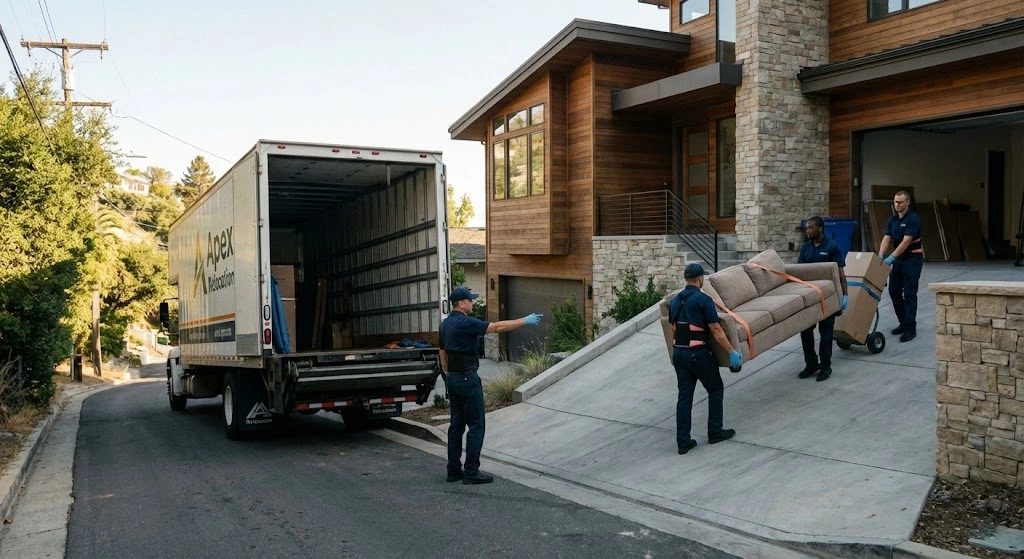
Moving in hillside areas requires specialized planning for steep driveways, narrow streets, and limited parking. Schedule on-site evaluations, hire experienced movers with proper equipment, clear all pathways, and consider shuttle trucks for hard-to-reach properties.
Moving to a hillside property presents challenges you won’t face on flat streets. The narrow roads wind around curves. The driveways climb at steep angles. Parking spaces disappear when you need them most. Your furniture suddenly feels heavier when you’re carrying it up a 30-degree slope.
But hillside moves don’t have to be nightmares. With the right planning and professional help, you can relocate smoothly and safely. This guide walks you through everything you need to know about moving in hillside areas.
Schedule an On-Site Visual Estimate

Never accept a quote over the phone for a hillside move. The distance between your front door and where a truck can park makes all the difference in cost and time.
Professional movers need to see your property in person. They’ll measure the walking distance from the street to your entrance. They’ll check if a full-size truck can navigate your driveway or if they need a smaller vehicle. They’ll spot potential obstacles like low-hanging branches, tight turns, or surfaces that could damage during the move.
During the walkthrough, ask questions. Can the truck reach your driveway? Will they need special equipment like ramps or dollies with better grip? How long will the move take given the terrain?
Some hillside properties can’t fit a standard 26-foot moving truck. Sharp curves, steep inclines, or narrow streets make it impossible. In these cases, movers use shuttle trucks. They park the main truck at the bottom of the hill and ferry your belongings up in a smaller vehicle. This takes more time and costs more, but it’s often the only safe option.
Hire Movers Who Know Hillside Work

Not all moving companies handle hillside relocations well. This type of move demands physical strength, specialized equipment, and careful planning.
Before hiring anyone, check their credentials. Verify their license number and insurance coverage. Read reviews that specifically mention steep driveways, long walks, or difficult access. Look for companies with years of experience in mountain-adjacent neighborhoods.
Experienced hillside movers know how to load trucks to maintain balance on slopes. They understand how to carry furniture safely up long staircases. They bring the right equipment for the job, from heavy-duty dollies to straps that prevent items from sliding.
You want a crew that won’t show up unprepared. The wrong team can damage your property, break your belongings, or even hurt themselves trying to navigate terrain they don’t understand.
Understand Your Parking Situation Early
Parking causes more headaches than almost anything else in hillside moves. Streets are narrow and curved. Cars line both sides. Some neighborhoods ban parking entirely on certain blocks.
Contact your moving company weeks before your move date. Ask how to reserve parking spots for their truck. Some hillside areas require permits from local authorities. Others need you to post signs 48 to 72 hours in advance.
In many cases, trucks park at the bottom of a hill because they can’t safely climb your street. This means movers walk up and down repeatedly, which adds time and labor costs to your bill.
If your street allows it, consider a weekday move. Fewer cars park on the street during business hours. Your neighbors won’t be hosting weekend gatherings. The route stays clearer and gives movers easier access.
Clear Every Pathway Before Moving Day
Hillside homes often feature beautiful landscaping, decorative stones, and winding walkways. These elements add charm but create obstacles during a move.
Walk the path from your entrance to where the truck will park. Remove potted plants, garden decorations, outdoor furniture, and anything else blocking the way. Coil up hoses. Put away tools. Sweep away loose gravel or debris.
Steep or uneven surfaces already challenge movers carrying heavy items. Don’t make it harder by leaving obstacles in their path. A clear route keeps everyone safer and speeds up the entire process.
Look at overhanging branches too. A sofa balanced on a mover’s shoulder needs clearance above. Trim back anything that could snag or knock items during transport.
Protect Premium Surfaces and Materials
Many hillside properties feature high-end finishes. Natural stone steps. Marble entryways. Custom woodwork on decks. These surfaces cost thousands to install and can scratch or chip easily.
Ask your movers about floor protection. Professional companies bring mats, runners, and padding to cover walkways and entrances. This prevents damage from dollies, heavy furniture, and repeated foot traffic.
If your property has particularly delicate surfaces, mention them during the visual estimate. The movers can plan accordingly and bring extra protection materials.
Pack Early and Label Everything Clearly
Time costs more during hillside moves. The longer walking distances mean movers spend more time carrying items up and down slopes. Every trip takes effort.
Pack everything before the movers arrive. Don’t leave last-minute items scattered around. Pre-packed boxes let the crew work efficiently without waiting for you to finish.
Label each box with its room destination and a brief contents description. Write on multiple sides so labels stay visible no matter how boxes get stacked. This helps movers place items in the right rooms at your new home, preventing unnecessary trips back and forth.
For fragile items, use extra padding. The longer walking distances and steeper angles create more opportunities for jostling. Wrap breakables in bubble wrap, use quality boxes, and mark them clearly as fragile.
Document Your Belongings Before the Move
Take photos of valuable furniture and electronics before moving day. Focus on their current condition. Capture any existing scratches, dents, or wear.
This documentation protects you if something gets damaged during the move. You’ll have proof of what your items looked like beforehand, which helps with insurance claims or disputes.
For high-value items, consider getting professional appraisals. This establishes their worth and makes claiming full value easier if damage occurs.
Prepare Your New Hillside Home
If you’re moving into another hillside property, prepare it just as thoroughly as your current one. Make sure pathways are clear. Measure doorways and staircases to confirm furniture will fit. Identify exactly where you want large pieces placed.
Having a floor plan ready saves time. Movers won’t need to ask where every item goes. You won’t need to rearrange heavy furniture later because placement wasn’t thought through.
Check that utilities are active at your new home. Nothing frustrates movers more than arriving to find they can’t use bathrooms or get drinking water.
Stay Present and Available During the Move
Your presence helps immensely during a hillside relocation. Movers may have questions about which items are fragile, what needs special handling, or where boxes should go.
Being on-site lets you provide immediate answers. You can redirect movers if they’re about to put something in the wrong room. You can point out which furniture pieces come apart for easier transport.
This real-time communication prevents confusion and keeps the move flowing smoothly. It also gives you peace of mind knowing everything is handled correctly.
Consider Weather Conditions
Hillside moves become more difficult in bad weather. Rain makes walkways slippery. Wind creates hazards when carrying large items. Extreme heat exhausts crews faster.
Check the forecast for your moving day. If severe weather is predicted, consider rescheduling. A delay beats the risk of injuries or damaged belongings.
If you must move during questionable weather, discuss it with your moving company. They may need to bring additional safety equipment or adjust their approach.
Handle Insurance Properly
Moving insurance matters more for hillside relocations. The challenging terrain increases the risk of accidents. Even the most careful movers can slip on a steep walkway or lose their grip on a difficult incline.
Most moving companies offer basic coverage that pays 60 cents per pound for damaged items. This rarely covers full replacement costs. A 50-pound television worth 800 dollars would only get you 30 dollars under basic coverage.
Consider full-value protection instead. You’ll pay around 1 to 2 percent of your shipment’s declared value, but damaged items get repaired, replaced, or reimbursed at current market value.
For exceptionally valuable items, look into third-party moving insurance. These policies often provide broader coverage and handle claims independently from the moving company.
Plan for Longer Move Times
Hillside moves take longer than standard relocations. The extra walking distance means more trips. Steep slopes slow everyone down. Shuttle trucks add another layer of time.
Build buffer time into your schedule. Don’t plan to move out one morning and host dinner guests that evening. Give yourself and the movers room for unexpected delays.
Discuss timeline expectations during your visual estimate. Ask how long the move should take given your specific property conditions. Factor in extra time for rest breaks, which crews need more often when working on slopes.
Do a Final Walkthrough
Before the moving truck pulls away, walk through every part of your home. Check all levels, closets, storage areas, garages, balconies, and outdoor spaces.
Hillside homes often have multiple levels and hidden nooks where items get overlooked. That guest bedroom on the lower level. The storage shed behind the house. The attic space accessed through a small door.
A thorough final check prevents the frustration of realizing later that you left something behind. It only takes a few minutes and can save you from making a special trip back.
Know When to Choose Weekday Moves
Weekends bring more challenges in hillside neighborhoods. More residents are home. More cars fill the streets. Social gatherings create parking nightmares and make navigation harder.
Weekday moves typically offer clearer routes and easier truck access. If your schedule allows flexibility, choose a Tuesday through Thursday move. You’ll likely save time and reduce stress.
Communicate Special Concerns Upfront
Every hillside property has unique challenges. Maybe your driveway has a particularly sharp curve. Perhaps your front steps are narrower than standard. You might have an expensive antique that needs extra care.
Share these concerns during your visual estimate. Don’t assume the movers will figure it out on moving day. The more they know in advance, the better they can prepare.
Write down special instructions and give them to the crew leader. Mention which surfaces scratch easily. Point out which furniture pieces disassemble. Note any items that need temperature control.
Verify Moving Company Credentials
This bears repeating because it matters so much. Hillside moves carry more risk than standard relocations. You need professionals who are properly licensed and insured.
Ask for proof of licensing. Check that their insurance covers your full property value. Look for reviews from customers who had similar hillside challenges.
Don’t hire based solely on price. The cheapest quote often comes from companies cutting corners on equipment, insurance, or experience. Those savings vanish when something goes wrong.
Make Your Hillside Move Smooth
Moving in hillside areas demands more planning than standard relocations. The terrain challenges even experienced movers. But with proper preparation, the right professional team, and attention to these details, your move can proceed smoothly.
Start planning early. Schedule that visual estimate weeks in advance. Clear pathways before moving day. Protect your premium surfaces. Document your belongings. Stay present during the move.
The extra effort pays off when you arrive at your new home with everything intact and everyone safe. Hillside living offers beautiful views and unique properties. Getting there just requires a bit more thought and preparation than moving on flat ground.
Take these tips seriously. Work with experienced professionals. Communicate clearly. Your hillside move will be challenging, but it doesn’t have to be a disaster. With smart planning and the right approach, you’ll be settled into your new home before you know it.


Comments are closed.